



The foundations of an organized family: choosing and setting up your system | Parental Leadership special feature
02 February, 2025
By Dominique Bernèche, founder of Les Belles Combines and Octave
You're sold on the parent leader approach, but where do you actually start? How do you choose the system that will suit your family? Here's your practical guide to laying the groundwork for an effective, lasting family organization.
Beyond the simple chore chart
You can try every magnetic board on the market, but it's by understanding that an organization system goes far beyond a simple physical tool that you'll finally find your rhythm. An effective system is, above all, a method of communication and coordination that unites the whole family around a common goal.
The three fundamental pillars of an effective system
1. Visibility: the cornerstone of family organization
Visibility isn't just a matter of putting things on display. It's making sure every family member can access and understand the information they need:
-
Information accessible to everyone: Every family member should be able to easily check the information that concerns them, whether it's the tasks to do, upcoming events or routines to follow.
-
A strategic spot in the house: The system should be placed somewhere everyone passes through. The kitchen or the entryway are often ideal spots because they're natural traffic areas.
-
A format suited to the kids' ages: The youngest need pictures and pictograms, while older kids can handle text and more complex lists.
2. Simplicity: the key to long-term adoption
A simple system will be adopted more easily and kept up over time:
-
Clear instructions: Every family member needs to understand exactly what they have to do, when and how. Instructions should be worded positively and precisely.
-
Intuitive use: The system should be usable without constantly having to consult a manual. Everyday actions should be obvious.
-
Easy maintenance: The simpler the system is to maintain, the better its chances of lasting. Avoid systems that require too many updates or too much upkeep.
3. Adaptability: the guarantee of longevity
A good system evolves with your family:
-
Evolving with needs: Your system should be able to adapt as your kids grow and their responsibilities change.
-
Flexibility across the year: It should be able to adjust to the different times of the year (school, vacations, summer camps) and to changes in routine.
-
Room for personalization: Every family is unique, and your system should be able to reflect your values and the way you work.
Detailed comparison of systems: strengths and weaknesses
The traditional Les Belles Combines systems
Our products are designed specifically for families, with durable materials and proven methods. Here's how to choose based on your situation:
Chore charts, routine charts and wall calendars
Advantages:
-
Constant visibility: always in front of you, impossible to ignore
-
Reliability: no battery or internet connection problems
-
Strong visual impact: an excellent way to make kids accountable
-
Tactile appeal: especially effective for young children
Drawbacks:
-
Requires dedicated wall space
-
Manual updates required
-
Less flexible for frequent changes
Digital solutions: the Octave app
Advantages:
-
Universal accessibility: can be checked on any device
-
Instant sharing among family members
-
Real-time updates
-
Customizable notification and reminder system
-
Perfect for active, on-the-go families
Drawbacks:
-
Reliance on technology and an internet connection
-
Risk of distraction from other notifications
-
May be less suited to very young children
Detailed selection guide based on your family profile
Families with young children (ages 2 to 7)
The key is simplicity and visual stimulation. Prioritize:
-
Visual systems with clear, playful images
-
Easily recognizable pictograms
-
Simple, repetitive routines that give them reference points
-
Charts placed at kid height to encourage independence
-
Immediate, tangible rewards
Families with kids of mixed ages
The challenge is to meet different levels of maturity. Opt for:
-
Hybrid systems combining several approaches
-
Levels of complexity suited to each age
-
Evolving responsibilities that grow with the child
-
A combination of traditional and digital tools
For example, use charts with pictograms for the youngest kids' routines, while keeping a shared digital calendar for the whole family.
Families with teenagers
The focus is on independence and accountability. Prefer:
-
Digital solutions that match how they use technology
-
Systems that allow a lot of independence
-
Discreet reminders through the app
-
Collaborative planning that involves their participation
Gradual rollout: a step-by-step guide
Phase 1: Preparation (1 to 2 weeks)
This phase is crucial for laying a solid foundation:
-
Do a complete audit of your current organization
-
Consult every family member to understand their needs
-
Set clear, realistic goals
-
Choose the system that best matches your needs
Phase 2: Testing (2 to 3 weeks)
The trial period lets you fine-tune the system:
-
Set up the chosen system in a strategic spot
-
Train each family member in how to use it
-
Make daily adjustments based on feedback
-
Note the friction points so you can fix them
Phase 3: Adoption (1 to 2 months)
The consolidation phase establishes the new habits:
-
Establish clear, regular routines
-
Clarify everyone's responsibilities
-
Celebrate small successes to keep motivation up
-
Make minor adjustments if needed
The essential questions to ask before choosing
Before you dive in, take the time to answer these fundamental questions:
-
Tech level: How comfortable is your family with technology?
-
Budget: How much can you invest in this system?
-
Current routine: What are your current daily habits?
-
Friction points: Where are the main organizational challenges?
-
Communication: What communication methods do you already have in place?
Start small, but start now
The most common mistake is trying to change everything at once. “At first, I had everything planned down to the minute,” says Stéphanie, a mother of two. “I quickly realized I had to leave room for the unexpected.”
Start by:
-
Choosing one specific thing to improve
-
Putting a simple system in place
-
Observing the results
-
Adjusting as needed
The natural evolution of your system
“Our system evolved naturally,” explains Marion, a mother of three. “We started with a simple chore chart, then gradually added elements as we needed them. Now with Octave, we have more latitude: the older kids create their own lists and add their events to the calendars more spontaneously.”
Conclusion: an investment in the future
Choosing and setting up a family organization system is a crucial step in your transformation into a parent leader. Take the time to think carefully about your needs and don't hesitate to experiment with different approaches. The goal isn't perfection, but a gradual improvement in your family's daily life.
Coming up in our complete special feature on parental leadership:
Want to track your progress? Use our progress guide directly in the Octave app or download its printable version from our free printables.
🚀 Find this article and much more in the Octave app (shared calendar, collaborative task list, meal planner, centralized family info and independence tracking), your number one ally for an organized family life! 📱✨
Put these tips into practice
Get the whole family organized with Octave
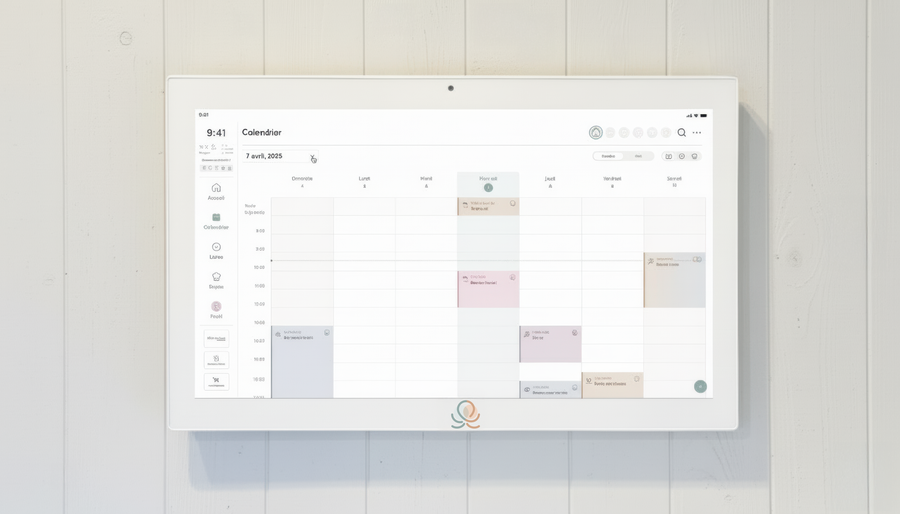
Meals, chores, the calendar and routines for the whole family in one place: on everyone's phone and on the Station on your wall.
The app is free on iOS and Android.