



Stress-free holiday planning (start right now!)
03 November, 2025
Halloween is behind us, the official sign that Christmas will soon be knocking at our doors. Between the gifts to buy, the house to decorate, the meals to plan and the budget to stick to, do you more often than not reach December 24 completely exhausted from weeks of preparation? What if we told you there's a way to fully enjoy the magic of the holidays without losing your mind? The key: start your preparations right now, in early November.
Action plan: eight weeks before Christmas
Week 1: Set the holiday budget
Before buying anything or dreaming about the decorations that will adorn your home, take the time to establish one important part of your planning: your budget.
Why start with money?
Without a clear budget, you'll probably spend more based on your emotions and social pressure. And in January, hello guilt, financial stress and impressive credit card bills.
How to set your budget:
1. Determine the total amount available.
How much can you reasonably spend on Christmas WITHOUT going into debt or compromising your financial obligations in January? Be honest: this amount is your overall budget.
2. Divide it into categories.
- Gifts (children, spouse or partner, extended family, friends, teachers)
- Food and entertaining
- Decorations
- Festive clothing
- Miscellaneous (special activities, unexpected expenses)
3. Break down the gifts.
List every person you'll give a gift to and assign a maximum amount not to be exceeded for each person.
4. Write this budget down in your Octave app to always have it at your fingertips, or on this handy printable!
A little tip
Open a separate savings account or set aside a physical envelope for Christmas purchases only. Transfer your budget into it now; when the money's gone, no more purchases!
Week 2: Declutter the playroom
Before new toys come in, others have to go out: a simple mathematical equation and... a psychological one!
How to declutter with the kids
1. Involve them in the process.
2. Create three piles (use this printable to help you sort things out!).
- Keep: Toys that are used regularly and loved
- Give away: Toys in good shape that are no longer played with
- Toss: Broken, incomplete or unusable toys
3. The “one in, one out” rule.
For every new toy received at Christmas, an old one has to go. This rule helps maintain balance in the long run.
4. Donate quickly.
Don't let donation bags sit in the garage for three months. Take them right away to a charity or a thrift store, or give them away through local Facebook groups. That way you nip last-minute regrets in the bud!
Bonus: Take a photo before you give it away
If your child hesitates to part with a toy they're attached to but don't use, take a photo of it and create a “toy memory album.” This will surely help your child let go.
Week 3: Make the gift list
Now's the time to turn vague wishes into a concrete, realistic list.
Step 1: The kids' list (letter to Santa)
Sit down with each child and help them write their letter to Santa. Encourage them to ask for 3 to 5 realistic things. Take a photo of it or keep a copy – it will be your shopping guide.
Tip: If your child's list is too long, ask them to choose their three favourite items.
Step 2: The extended family list
Gather gift ideas for the whole extended family (parents, in-laws, brothers, sisters, nephews, nieces) in one place. Also note what YOU'd like to receive – you'll surely be asked!
Step 3: Share suggestions with your relatives
Send an email or group message this week: “Hi! To avoid duplicates and target the kids' tastes, here are a few gift ideas for [name]. Do you have any suggestions for us too?”
Step 4: Your personal list
Write down what you'd like to give your partner, close friends, teachers, etc. Be specific: “Italian cookbook” rather than “something for the kitchen.” The more precise it is, the faster and more efficient your shopping will be.
Week 4: Do the shopping
Effective shopping strategy
1. Shop with your list in hand (on paper or on your phone). NEVER deviate from this list. Impulse purchases are often what blow the budget.
2. Buy online as much as possible. It lets you avoid the crowds and in-store temptations, compare prices quickly... and skip the stress!
3. Check return policies. Make sure you can exchange or return an item in case of a duplicate or a mistake.
4. ALSO buy festive outfits this week. If your children need a dress, a blazer or shoes for holiday gatherings, buy them now while the selection is still at its best.
Where to hide the gifts?
Find a secret hiding spot right now: the top of a closet, under your bed, in the basement, in the trunk of your car. Discreetly label each gift (“For Julie – from Mom and Dad”) so you don't get mixed up when it's time to wrap them.
Week 5: Decorate the house
Now that the shopping is done, you can focus on the festive atmosphere without stress!
When to decorate?
Ideally, start putting up decorations in early December: early enough to enjoy them for a long time, but not so early that you get sick of seeing them before Christmas!
Get the whole family involved
Decorating together becomes a joyful family ritual instead of a chore for one exhausted parent: Christmas music, hot chocolate, and everyone pitches in according to their age.
Golden rule: less is more
You don't need to turn your house into Santa's village! A few well-placed touches create a festive atmosphere without forcing you into hours of packing things away in January.
Week 6: Make the desserts
Pastries, cookies and desserts that keep well or can be frozen can be made starting now.
A few suggestions:
- Shortbread cookies (to freeze)
- Date squares
- Sucre à la crème (Quebec brown sugar fudge)
- Fudge
- Fruitcake
Make it a family activity
Kids love baking during the holiday season; even toddlers can stir a mixture, decorate cookies or simply lick the spoons!
List what's left to do
Also note the desserts to prepare in the days before Christmas (fresh pies, yule log, desserts that need a short time in the fridge).
Week 7: Wrap the gifts
To avoid unnecessary stress on Christmas Eve, wrap all the gifts right now.
An efficient wrapping session
If possible, block off an evening or a full afternoon in your schedule. Take out ALL the gifts, the wrapping paper, ribbons and tags, and wrap them all. Put on a Christmas movie or festive music, pour yourself a glass of wine (or any other drink of your choice!), and turn this moment into something enjoyable rather than a last-minute chore.
Week 8: Track your spending
You're almost there! Last step: check that you've stuck to your budget.
Add up all your expenses
Pull out all your bills, credit card statements and receipts, and add up everything you spent on Christmas.
Compare your final spending with your original budget
- Under budget? Congratulations! You can either keep the difference or add a little something to your purchases if you like.
- Slightly over? Identify where you slipped so you can adjust next year.
- Way over? Honestly analyze what happened. Impulse buys? Social pressure? Learn from it so you can do better next year.
To keep this action plan handy, print and display our printable made just for this purpose where you'll see it!
There you have it! On December 24, while others are frantically running around crowded stores, you'll be calm and ready, and you'll truly enjoy the magic of the holidays with your family.
That's the real Christmas gift you're giving yourself: peace of mind. 🎄✨
Put these tips into practice
Get the whole family organized with Octave
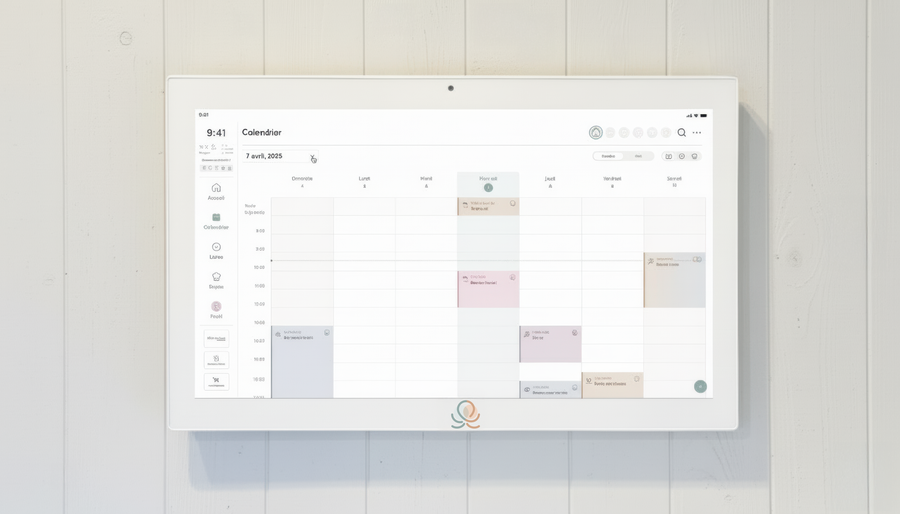
Meals, chores, the calendar and routines for the whole family in one place: on everyone's phone and on the Station on your wall.
The app is free on iOS and Android.