



Family motivation guide: creating routines that work | Parental Leadership special feature
02 February, 2025
By Dominique Bernèche, founder of Les Belles Combines and Octave
How do you keep the whole family motivated in daily organization? Discover effective strategies for establishing lasting routines and motivating your kids to take part in family chores. A practical guide for parents looking to create a family organization system that is motivating and built to last.
Beyond rewards: understanding true motivation
“At first, I gave my kids stickers for every task they completed,” says Sophie, a mother of three. “Some of my parent friends told me it wasn't the ‘right’ way to do it. Yet those little rewards were the springboard my kids needed. Today, they're proud to naturally contribute to family life.”
Expertise backs up the approach
“Motivation systems allow a child to visualize their successes, let them reach goals in the form of rewards (privileges or material goods) and make their achievements tangible in a generally playful context,” explains Laurence Morency-Guay, a CEGEP teacher in developmental psychology and author.
The two essential dimensions of family motivation
Extrinsic motivation: a necessary springboard
External motivation plays several fundamental roles:
-
Supports the learning of new tasks by providing concrete reference points
-
Helps get through less motivating periods with tangible goals
-
Makes it possible to restart good habits when the routine runs out of steam
-
Offers visible recognition of the effort made
External motivation systems can include:
-
Well-chosen tangible rewards that reflect family values
-
Special privileges tied to fulfilling responsibilities
-
Specific, sincere verbal recognition
-
Point systems adapted to the child's age and interests
Intrinsic motivation: the long-term goal
Internal motivation develops gradually through:
-
The sense of personal accomplishment that grows with each success
-
The pride of actively contributing to the family's well-being
-
Growing independence and stronger self-confidence
-
A sense of family belonging that grows stronger
Recognition: a bridge between external and internal motivation
What we perceive as extrinsic motivation can actually be a precious token of appreciation. Just as adults receive recognition for their work, kids deserve to see their efforts valued.
Effective forms of recognition
-
Quality time: A special outing or one-on-one time with a parent
-
New responsibilities: Privileges that recognize their growing maturity
-
Family celebrations: Moments that highlight collective effort
-
Meaningful rewards: Items or activities that mean something to the child
“When I see the effort my 8-year-old daughter puts into folding the laundry properly, even if it isn't perfect, I think it's only natural to acknowledge it in a special way,” explains Julie, a mother of two. “It's less a reward than a way of telling her: I see your effort, I appreciate it, and it really matters to our family.”
Creating meaningful routines: the foundation of engagement
The pillars of an effective routine
1. Consistency
-
Establish consistent schedules that respect natural rhythms
-
Create predictable sequences that become automatic
-
Put clear markers in place that give structure to the day
2. Flexibility
-
Build in some wiggle room for unexpected situations
-
Include alternatives for busier times
-
Allow routines to evolve with changing needs
3. Ownership
-
Involve the family in creating the routines
-
Allow personalization based on individual preferences
-
Give a sense of control over how things unfold
Key moments: organizing daily routines
The morning routine: starting the day off on the right foot
-
Prepare the essentials the night before
-
Set up a clear, logical sequence of actions
-
Build in buffer time to handle the unexpected
Coming home from school: a smooth transition
-
Create a soothing transition ritual
-
Allow for some much-needed decompression time
-
Clearly map out the homework, chores and downtime sequence
The evening routine: preparing for tomorrow calmly
-
Set aside time to get ready for the next day
-
Establish a soothing bedtime routine
-
Reserve some time for family connection
Weekend routines: balance and preparation
-
Set a fixed time slot for family chores
-
Balance responsibilities and free time
-
Plan the week ahead together
-
Keep some flexibility for spontaneity
Age-appropriate strategies
For little ones (ages 3 to 6)
-
Use visual, playful reward charts
-
Celebrate small victories right away
-
Turn chores into fun games
For middle kids (ages 7 to 10)
-
Put more elaborate point systems in place
-
Give them responsibilities that make them feel valued
-
Link new freedoms and responsibilities
For older kids (ages 11 and up)
-
Grant privileges tied to their responsibilities
-
Involve them in negotiating the rules
-
Recognize their growing maturity
The crucial role of parents: leading by example
Kids don't do what we tell them to do, they do what they see us do. Parents' motivation is contagious. To maintain family engagement:
-
Follow the established routines yourself
-
Keep your commitments consistently
-
Openly acknowledge your mistakes
-
Celebrate collective successes
Conclusion: cultivating lasting motivation
The key to lasting family motivation lies in the balance between structure and flexibility, between external rewards and intrinsic satisfaction. Well-established routines create the framework, but it's the parents' positive, consistent commitment that keeps the system alive.
The key takeaways:
-
Strike a smart balance between external and internal motivation
-
Create routines that are both structured and flexible
-
Adapt your strategies to each child's age and personality
-
Keep recognizing effort consistently
-
Stay positive and patient in the face of challenges
Coming up in our complete special feature on parental leadership:
Want to track your progress? Use our progress guide directly in the Octave app or download its printable version from our free printables.
🚀 Find this article and much more in the Octave app (shared calendar, collaborative task list, meal planner, centralized family info and independence tracking), your number one ally for an organized family life! 📱✨
Put these tips into practice
Get the whole family organized with Octave
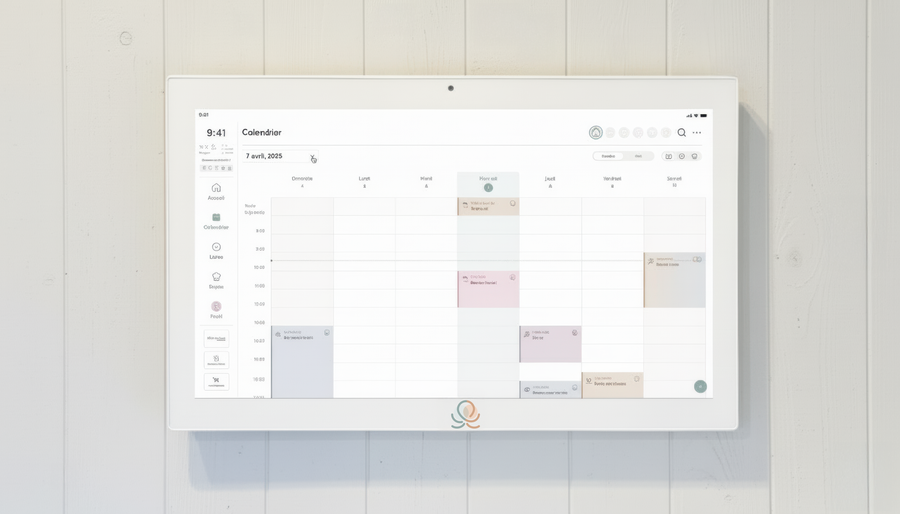
Meals, chores, the calendar and routines for the whole family in one place: on everyone's phone and on the Station on your wall.
The app is free on iOS and Android.