



Family minimalism: less clutter, more time for what matters
14 September, 2024 • Par Natacha Langlois
In a world where everyday life is often marked by overabundance (of things, of tasks, of distractions), it's easy for a family to feel overwhelmed. We often accumulate objects, obligations and activities without realizing that this overload is slowly eating away at our time, our energy and our peace of mind. What if the key to regaining family balance lay in a simpler, more intentional approach to life? Discover in this article how minimalism, by inviting you to get rid of what's unnecessary, could help your family gain time and serenity. Find practical tips for decluttering your home, simplifying your routine and creating an environment that fosters richer, more harmonious family relationships!
Why embrace minimalism?
While family life is often marked by accumulation (overflowing toys, piling-up clothes, mounting obligations), this cluttered way of living has consequences: it increases stress, reduces the quality of time spent together and overloads parents and kids alike. Embracing minimalism means choosing to focus on what's essential, leaving aside whatever doesn't directly contribute to our well-being.
This way of life isn't just about objects, it's also a state of mind. By eliminating material clutter, we also make room for what's essential: shared family moments, activities that nourish the soul and a life that is often more harmonious.
The benefits of minimalism for the family
Minimalism offers many benefits for family life. By reducing the number of objects to manage, the daily routine is automatically simplified. Fewer things really does mean less mess, less cleaning, and therefore more time for the activities that truly matter.
Minimalism also lets you refocus your attention on family relationships. By lightening your living space, you create a calm environment that's conducive to conversation. You end up with more time to play with your kids, talk with your partner, or simply relax together without being distracted by constant clutter. Finally, adopting a minimalist lifestyle lets you teach your kids important values: simplicity, appreciation for what they have, and the importance of choosing quality over quantity.
Starting the decluttering process as a family: how?
The path to family minimalism can seem intimidating, but it's possible to start little by little. The first step, of course, is to involve the whole family. Explain the benefits of minimalism to your kids, and make it a shared project. For example, you can set goals together, such as decluttering a specific room or cutting the number of toys down to a reasonable amount.
Start with small wins. Choose an area of the house, like a cupboard or a shelf, and sort through the items together. Decide what's essential and what can be donated, sold or recycled. The golden rule: if an item hasn't been used in six months to a year, it's probably not essential! This gradual approach keeps you from feeling overwhelmed by the task.
Finally, create lasting habits so clutter doesn't creep back in. For example, adopt the “one in, one out” rule: for every new item that comes into the house, an old one has to go out. Also hold regular decluttering sessions to keep your living space orderly and soothing.
For an organizing expert's tips, take a few minutes to watch this video by Mlle Range-tout, which gives you the four steps for easily decluttering and organizing your home! Want to start with your wardrobe? Find her practical tips for creating your minimalist wardrobe here!
Practical tips for maintaining a minimalist lifestyle
Adopting a minimalist lifestyle also means choosing experiences over possessions. Instead of buying new toys for your kids, suggest family outings, creative activities or simply relaxing moments spent together. These experiences create lasting memories while avoiding material clutter.
Another essential aspect of minimalism is, of course, managing technological distractions. So try to limit screen time, whether it's the television, the tablet or the phone. By cutting back on these distractions, you free up time for more enriching activities, such as reading, outdoor play or family conversations. To help, take a moment to browse this blog article, or check out our special feature “Managing Screens” right now!
Challenges and solutions of family minimalism
Adopting minimalism as a family can, of course, also pose some challenges. Kids, for example, may be reluctant to part with some of their favourite toys or objects. To overcome this resistance, involve them in the decision-making process and explain the benefits of minimalism. Show them that fewer toys means more time to play with the ones they truly love. Are your little ones still reluctant to get rid of surplus toys and little treasures? Teach them the technique suggested by Mlle Range-tout, or offer them this handy printable!
Managing sentimental items is also often a challenge. Photos, travel souvenirs or gifts have an emotional value that can make decluttering difficult. The solution? Keep only the most meaningful items, or digitize keepsakes to free up space while holding on to those precious moments.
Finally, maintaining a minimalist lifestyle takes a long-term commitment. To stay motivated, it's important to regularly review family goals and adjust the process if necessary. Celebrate the progress you've made, and remember that every step toward minimalism is a victory in itself.
Family minimalism is more than just a trend: it's a lifestyle that can transform the way you manage your time, your relationships and your home. By getting rid of what's unnecessary, you create an environment conducive to tranquility and quality of life. Fewer things means more time for what really matters!
So, ready to start today? Choose an area to declutter, involve the whole family, and take a first step toward a simpler, calmer and more meaningful life! Or start our 30-Day Minimalism Challenge today, which you can also find anytime, for free, in our Octave app!
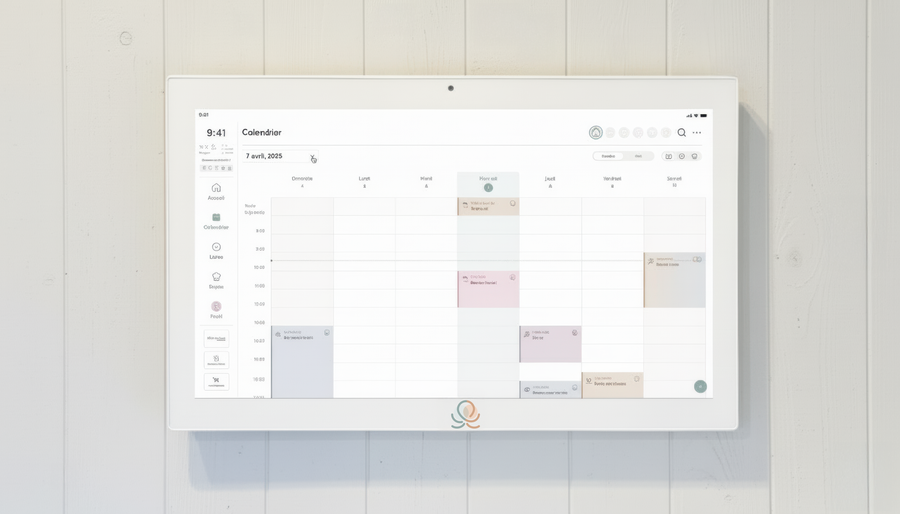
Put these tips into practice
Get the whole family organized with Octave
Meals, chores, the calendar and routines for the whole family in one place: on everyone's phone and on the Station on your wall.
The app is free on iOS and Android.