



Effective family communication: a guide to successful organization | Parental Leadership special feature
02 February, 2025
By Dominique Bernèche, founder of Les Belles Combines and Octave
You've set up a family organization system but you're running into resistance? Discover effective communication techniques to motivate the whole family and keep daily organization running harmoniously. A practical guide for parent leaders who want lasting buy-in from every member of the family.
Family communication: the key to successful organization
“I thought I'd found the perfect system, but nobody was using it,” confides Marie-Ève, a mother of three. “I realized it wasn't the system that was the problem, but the way I was presenting it to my family.” This realization highlights a crucial point: the best system is worthless without effective communication.
Take the stance of a caring leader
Imagine the ideal boss you'd love to have: the one who listens to your frustrations and helps you find solutions. As a parent leader, that's exactly the stance to take. Be:
-
Firm on the non-negotiables: Some tasks absolutely have to get done, and that's not up for debate.
-
Flexible on the method: How you get there can be discussed and adapted.
-
Open to solutions: When you meet resistance, ask: “How could we do things differently while still respecting this non-negotiable?”
Like a good business leader or a good teacher, your role isn't to control everything, but to make sure the goals are met, while listening to your team about how to get there.
Stay alert, though: watch for signs of demotivation and learn to tell them apart from signs that a system needs adjusting. Trust yourself: with experience, you'll recognize the times when you need to be firm and those when understanding is called for.
The basics of effective communication
Presenting the system in an inspiring way
How you introduce your organization system often determines its success:
-
Create a shared vision: Involve the whole family in the discussion about the expected benefits.
-
Use positive language: Talk about “opportunities” rather than “obligations.”
-
Make change desirable: Emphasize the concrete benefits for each member.
The importance of active listening
Communication is not a one-way street:
-
Listen to concerns: Every family member needs to feel that their opinion counts.
-
Validate emotions: Acknowledge that change can be hard.
-
Adapt to feedback: Show that you're ready to adjust the system as needed.
Handling the different kinds of resistance
Resistance by age
Young children (ages 4 to 8)
-
Common resistance: “It's too hard!”
-
Solution: Break tasks down into smaller, playful steps.
-
Practical example: Turn tidying up into a timed game.
Tweens (ages 9 to 12)
-
Common resistance: “It's boring...”
-
Solution: Give more independence in how things are organized.
-
Application: Let them choose not only the order of their responsibilities, but also when they want to do them. It's a great way to build their sense of organization and their independence.
Teenagers and resisters
When faced with “I don't need this,” take a different approach:
-
Explain your need: Help them understand that this system is necessary to keep the household running smoothly.
-
Share the responsibility: Offer to let them take turns being in charge of checking that tasks are done. This experience as coordinator will help them understand the challenges of family organization.
-
Respect their independence: Trust them with managing their time and doing things their own way, as long as the results are there.
A partner's resistance
Parenting collaboration calls for a particular approach:
-
Ask for a trial run: Invite your partner to try the system before rejecting it.
-
Point out the wins: Highlight the kids' small successes and the improvements in daily life.
-
Open the dialogue: Discuss shared goals for the family.
-
Avoid blame: Focus on solutions rather than problems.
-
Share the decision-making: Involve your partner in the organization decisions.
Pitfalls to avoid
Common communication mistakes
Avoid these stumbling blocks that can sabotage your efforts:
-
Constant criticism: Focusing only on what's going wrong.
-
Comparisons: Pitting family members against each other.
-
Inflexibility: Refusing to adapt the system to needs.
Preventive solutions
To maintain healthy communication:
-
Practise patience: Change takes time.
-
Stay consistent: Stand by your commitments and your words.
-
Be flexible: Adapt to your family's changing needs.
Conclusion: the balance between firmness and flexibility
The success of your organization system depends on your ability to be firm on the goals while staying flexible on the means of reaching them. As Sophie, a mother of two, puts it: “The key isn't to impose a perfect system, but to create together an organization that reflects who we are and that evolves with us.”
Coming up in our complete special feature on parental leadership:
Want to track your progress? Use our progress guide directly in the Octave app or download its printable version from our free printables.
🚀 Find this article and much more in the Octave app (shared calendar, collaborative task list, meal planner, centralized family info and independence tracking), your number one ally for an organized family life! 📱✨
Put these tips into practice
Get the whole family organized with Octave
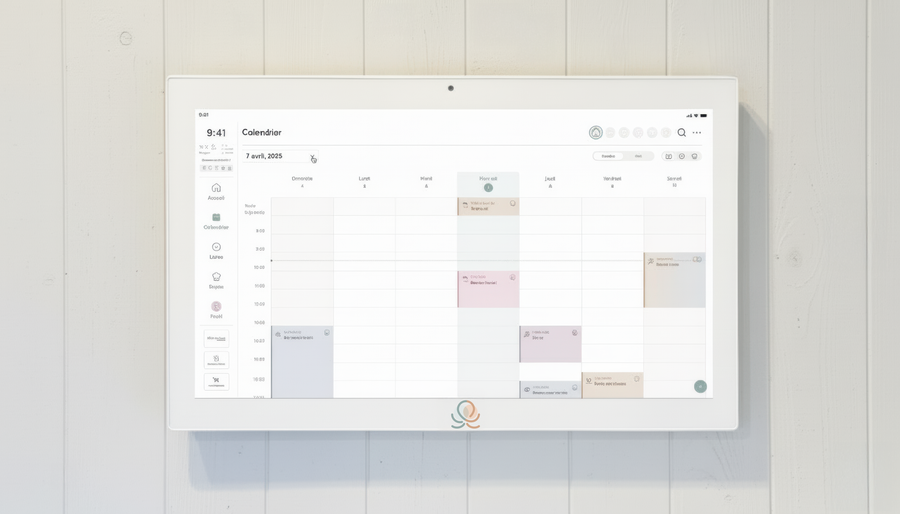
Meals, chores, the calendar and routines for the whole family in one place: on everyone's phone and on the Station on your wall.
The app is free on iOS and Android.