



5 time management strategies: organize, prioritize and simplify your daily life!
10 September, 2024
In the whirlwind of parenting life, time management often becomes a real headache. Between the kids' activities, professional responsibilities and household obligations, finding a balance can sometimes seem downright impossible! Today, even though we obviously can't promise you suddenly foolproof time management, we're sharing proven strategies developed by renowned authors, which offer different practical solutions for organizing your time better and reducing daily stress. Good time management will in fact let you work smarter (and not necessarily harder!), so that you can accomplish more in less time.
The Eisenhower Matrix: prioritizing the urgent and the important
One of the most famous time management methods is certainly the Eisenhower Matrix, popularized by the 34th president of the United States, Dwight D. Eisenhower. This matrix divides tasks into four categories: Urgent and Important, Not Urgent but Important, Urgent but Not Important, and Neither Urgent Nor Important. For parents especially, this matrix is a valuable tool for effectively prioritizing everyday tasks. By trying to apply it as often as possible, you'll easily be able to focus your energy on what really matters for your family!
The Pomodoro Technique: maximizing productivity in intervals
Developed by Francesco Cirillo, the Pomodoro Technique is based on the idea of working in 25-minute intervals, called “Pomodoros,” with each interval followed by a short break. For parents, who are often interrupted by their kids or other obligations, this technique helps maintain a high level of concentration while still allowing moments of rest.
Getting Things Done: freeing your mind from chaos
David Allen, author of the well-known book “Getting Things Done,” proposes a five-step method: Capture, Clarify, Organize, Reflect and Engage. The idea is to capture all your tasks, big or small, and organize them in a way that frees your mind from the constant stress of having to remember what's left to do.
The 2-minute rule: don't procrastinate on small tasks
Also drawn from the “Getting Things Done” method, the 2-minute rule is to immediately do any task that can be completed in two minutes or less. This rule is particularly effective for lightening the mental load and keeping small chores from piling up. For example, replying to a text, tidying a few toys or even emptying the dishwasher are tasks that can easily be handled in two minutes, leaving you more time for more important activities.
The Pareto Principle: focusing on what's essential
The Pareto Principle, or the 80/20 rule, states that 20% of your efforts produce 80% of your results. Applied to time management, this rule encourages you to identify and focus on the tasks that have the most impact on your daily life. So make sure you identify the tasks that bring the most value to your family life rather than scattering your time across lots of small tasks that often aren't really that important after all.
Time management is, of course, a permanent challenge for parents, but with effective strategies it can quickly get easier. Whichever method you choose, make sure to adapt it to your reality; take the time to try the different strategies, adjust them to your needs, and find the one that will finally help you navigate your family life better!
To learn more:
- The book “Getting Things Done” by David Allen
- The book “The Pomodoro Technique” by Francesco Cirillo
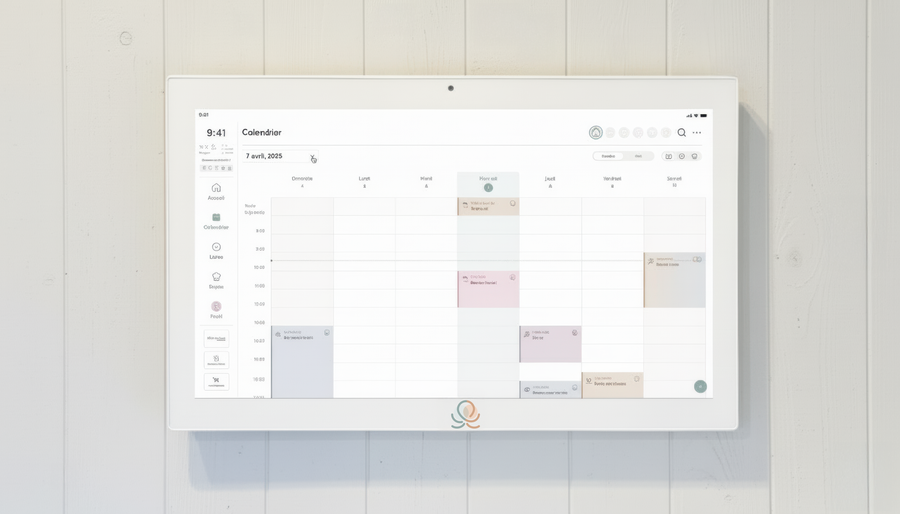
Put these tips into practice
Get the whole family organized with Octave
Meals, chores, the calendar and routines for the whole family in one place: on everyone's phone and on the Station on your wall.
The app is free on iOS and Android.