



Teaching kids money management
20 April, 2026
Even though money is probably one of the most important subjects for adult life, it is rarely taught to kids at home. While we take the time to teach them to read, write or ride a bike, we often forget to teach kids to manage a budget, to save or even to tell a need from a want, and many young adults end up with few concrete financial tools in their toolkit. The good news is that it's never too early (or too late!) to start, and that financial education can be done simply, through everyday routine!
Why talk about money with your kids?
Money is often still taboo in many Québec families, and yet kids who grow up in families where finances can be discussed openly generally develop a healthier relationship with them. Concretely, they understand that:
- Money is earned, and it doesn't simply grow on trees!
- Money has to be managed, which means making choices.
- Money is limited, so we can't have everything.
- Some things are needs and others are wants, a very important difference to understand!
Each age has its lessons
Of course, depending on their age, kids aren't always able to understand all the concepts related to finances, so the activities and lessons will not be the same. Here are a few suggestions based on your kids' ages.
Ages 3 to 4: the concrete basics
- Play store with real coins
- Pay for small purchases themselves at the checkout
- Understand that the wallet empties and doesn't fill itself back up
- Link parents' work to the money available: “Mom and Dad work to earn the money we spend”
Ages 5 to 7: allowance and first choices
- Introduce a small weekly amount, tied to chores or not depending on your family's values
- Let the child decide how to spend their money, even if the choice seems bad to us
- Experience the frustration of not having enough money for something they want
- Start talking about saving: “if you keep your money this week, you'll be able to buy something bigger next week”
Ages 8 to 11: structured management
At this age, it's time to suggest that the child divide their allowance into three categories, which they can easily visualize with the help of three separate containers:
- 🟢 Spend: for everyday purchases and small treats
- 🟡 Save: for a specific goal that requires a larger amount of money
- 🔴 Give: to develop a sense of generosity and solidarity
This structure helps kids concretely visualize what it means to make choices with limited resources.
Ages 12 and up: advanced concepts
- Manage a simple monthly budget (for example by using one of our templates to download!)
- Understand a bill or a bank statement
- Open a bank account in their own name
- Save for a specific personal goal (a trip, an electronic device, clothes)
- Understand the basics of taxes and the cost of living
Everyday opportunities not to miss
Financial education doesn't happen in a class, it can easily slip into the ordinary moments of daily life:
- At the grocery store: bring the kids along with a list and a budget, and explain why you choose one brand over another, talk to them about discounts and show them how to compare prices
- When they want to buy something: rather than saying no, calculate together how much it costs, how much the child has already saved and how many weeks it would take to get there
- At holidays and birthdays: encourage kids to think about what they really want before making their list, rather than writing everything down impulsively
- When shopping online: show them how to compare prices, read reviews and avoid the traps of impulse buying
What we really want to pass on to them
Financial education isn't about training little accountants, but rather about giving kids the tools to:
- Make informed, owned choices
- Not live beyond their means as adults
- Understand that financial freedom is built over time with good habits
- Know how to tell what they need from what they want
- Develop the patience needed to reach a goal
A child who learns early to manage their money, to wait and to give is a child better equipped to face the challenges of adult life. And it very often starts with a simple quarter in a glass jar!
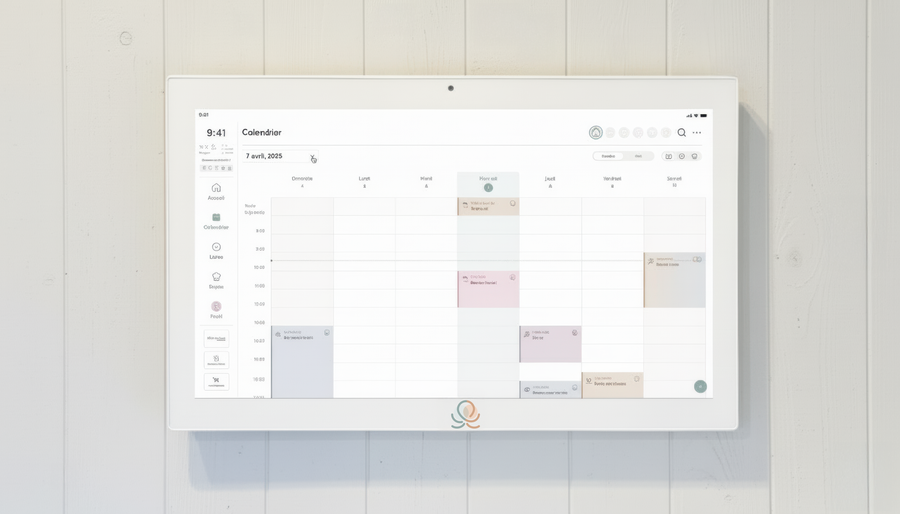
Put these tips into practice
Get the whole family organized with Octave
Meals, chores, the calendar and routines for the whole family in one place: on everyone's phone and on the Station on your wall.
The app is free on iOS and Android.