


Toy storage: simple systems that last
22 May, 2026
If you've ever spent time meticulously organizing your kids' toys only to find the same mess two weeks later, you know the problem isn't the tidying itself but the system you're using. A toy storage system that lasts isn't the one that looks best on Pinterest; it's the one that's simple enough for kids to follow on their own, day after day, without constant supervision. Here are a few tips for creating one that truly works.
Principle one: the less there is, the easier it is
Before even thinking about organizing anything, the most important question to ask is: are there too many toys? A child swamped with toys doesn't play better; they often play less well, and therefore tidy up even less well! The fewer the choices, the more creatively and for longer kids play with what they have.
Before reorganizing, take the time to do a thorough declutter. Involve the kids according to their age: from age 5 or 6, most of them can take an active part in the sorting. Three categories are enough: keep, donate, toss. Toys that are broken, incomplete or haven't been used in a year go, and what's left deserves to be stored well!
Principle two: everything has a place, and that place is obvious
Tidying most often fails because the place for each toy isn't clear, neither to the kids nor to the adults. A system that lasts rests on a simple principle: every toy has a designated place, and that place is obvious enough for a child to find it and use it without help.
In practical terms, that means:
- Open bins rather than closed boxes: kids tidy up much more easily when they can see where things go and reach them without effort
- Visual labels on the bins: a photo or drawing of the contents, a method that's especially helpful for kids who can't read yet
- Broad, logical categories: one bin for Lego, one for cars, one for building sets, one for figurines, no need to get more specific!
- An accessible height: toys used regularly are stored at kid height.
Principle three: the system must be realistic, not perfect
A perfect storage system that takes 15 minutes of meticulous work every evening is probably doomed to fail. An imperfect system that requires a daily tidying session of about 5 minutes, and that everyone can do on autopilot, will probably last for years!
Adjust your expectations accordingly. The goal isn't for the Lego to be sorted by colour, but for it to end up in its bin. In the same way, each puzzle piece doesn't need to be perfectly stacked, but it should end up in the right box stored in the right place. The bar must be low enough to be reached by the least organized members of the family, kids and adults alike!
A few concrete systems based on the space you have
For a child's bedroom, stackable bins or open storage cubes with baskets are generally effective. They're flexible, accessible and easy to rearrange when kids' interests change.
For a playroom or shared space, a low shelf with labelled bins works very well. The idea of a toy rotation is also worth exploring: you bring out half the toys, store the other half somewhere the kids can't reach, and switch every few weeks. Toys that reappear feel new, interest is renewed and the space is far less cluttered.
For small spaces or apartments, go for vertical storage: low wall shelves, under-bed storage and behind-the-door organizers. Every inch counts, and closed storage helps keep an orderly look in open spaces.
Involving the kids in creating the system
A child who helped create their own storage system will probably respect it better than a child who has a ready-made system imposed on them. So ask them where they think their cars should go, and let them choose the colour of their bin. This sense of ownership over how their space is organized is an important lever for fostering independence and a sense of responsibility.
In the end, a good toy storage system is the one that becomes invisible, the one you no longer need to manage because everyone knows where things go and does it naturally. It takes a little time to set up, but once it's in place, it profoundly changes daily life! 🧸
Put these tips into practice
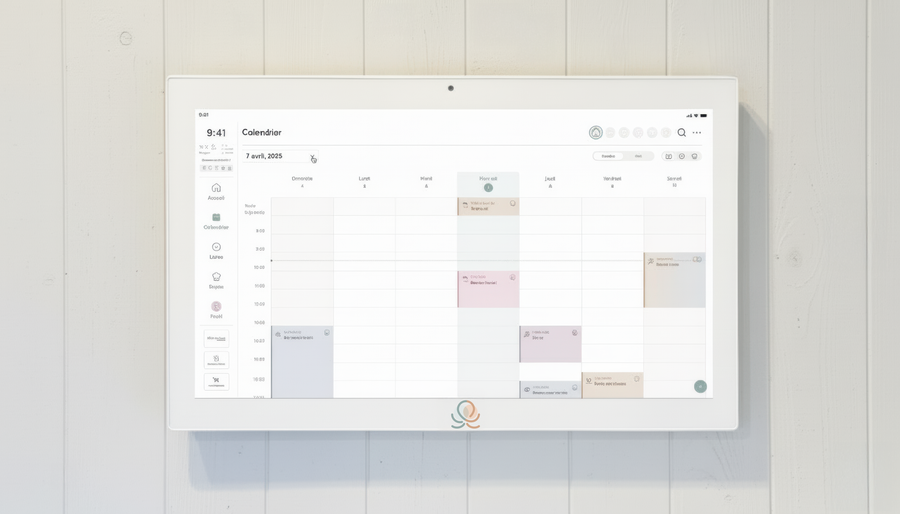
Get the whole family organized with Octave
Meals, chores, the calendar and routines for the whole family in one place: on everyone's phone and on the Station on your wall.
The app is free on iOS and Android.