



I tidy up on my own in the yard: a practical guide to building outdoor independence
28 April, 2025
The yard is a prime play space where your child can explore, have fun and burn off energy. Yet it's also one of the hardest spaces to keep tidy: bikes lying on their sides, toys scattered everywhere, forgotten balls... nobody likes coming home to find an actual battlefield outside. Not to mention that toys wear out quickly when they're left out in the rain, the sun and the elements. By setting up a simple, age-appropriate system, you'll turn tidy-up time into a positive routine rather than a source of conflict. Find out how to organize this space to foster your child's independence while keeping the peace in the family.
The basics of a well-organized yard
In everyday life, every moment spent as a family is a learning opportunity. Explaining to your kids why it's important to take care of their toys and their surroundings instills essential values that will stay with them for life.
A well-organized yard includes:
-
Defined, accessible storage zones such as a dedicated corner for water toys near the patio, a shelf under the garden shed for storing sports equipment, or an area marked off with coloured borders for sand toys and trucks
-
Containers suited to the different types of toys such as weatherproof plastic bins, hanging nets for balls, lockable storage chests and bike racks
-
A simple, easy-to-understand visual system with pictures or photos of the toys on each container, so even kids who can't read yet can identify them quickly
-
Clear, age-appropriate responsibilities such as “Mathis puts away the balls” and “Léa takes care of the sand toys”
-
A consistent, predictable routine for example, 10 minutes of tidying before the afternoon snack or always before heading back inside
The independent tidy-up routine
As with any new skill, kids need a clear method and well-defined steps to make this new habit of independence their own.
Create a simple sequence to follow:
-
I gather all my toys when I'm done playing
-
I sort the toys by category
-
I put each toy in its own container
-
I check that no toys are left outside
-
I close the weatherproof containers tightly
-
Now I'm ready for the next activity
Organizing the environment
A clear sequence increases the chances of success, but to maximize independence, the physical organization of the space plays a crucial role. A good labelling system with clear pictures and simple words will make your kids' independence much easier.
The outdoor storage system:
-
Sand bin: shovels, pails, moulds, sifters
-
Balls bin: all the throwing games
-
Rolling bin: bikes, scooters, helmets
-
Chalk and bubbles bin: outdoor art activities
Put small signs or stickers on the bins
Balancing independence and safety
Independence and safety must go hand in hand. If we want our kids to be able to put their toys away safely in the garage or the shed, where dangerous objects or products are often kept, we need to think it through carefully and make the storage space safe. Without this groundwork, kids will always depend on our supervision. By planning well, we can let them build their independence with peace of mind.
Three-level storage
Inspired by Volume 1 of Les Belles Combines, the three-level storage concept is particularly effective in the yard for ensuring both independence and safety:
Level 1 – Knee height: Put all the toys here that kids can use freely and put away easily (balls, sand toys, chalk). These bins should be light, easy to open and have very visible pictograms.
Level 2 – Waist height: Reserve this space for toys that need occasional supervision or that are meant for older kids (water games, small gardening tools, throwing games).
Level 3 – Out of reach: This level is for equipment that always requires adult supervision or that poses a risk (gardening tools, games with small parts, complex sports equipment).
Learning progression
Ages 3-4: Getting started
-
Put away one category of toys at a time
-
Follow simple visual instructions
-
Get help with the more complicated containers
-
Celebrate every success
Ages 5-6: Working together
-
Put away several types of toys
-
Recognize the storage icons
-
Help clean dirty toys
-
Take part in organizing the spaces
Ages 7+: Full independence
-
Think ahead and put things away before switching activities
-
Reorganize the bins when needed
-
Report damaged toys
-
Take the initiative to tidy up
-
Help the little ones learn
Two family approaches:
-
Individual tidying
-
Everyone puts away their own toys
-
Personal responsibility
-
Independence is valued
-
Group tidying
-
“All together” before going inside
-
Mutual help and cooperation
-
Stronger team spirit
Tips for success
-
Make tidying up playful: turn it into a speed game or a challenge (“Who can put away all the red toys before I count to 20?”)
-
Be consistent: require tidying up after every play period, no exceptions, even on rainy days or when you're in a rush
-
Allow time: build tidying up into the outdoor activity time (for example, 30 minutes of play includes 5 minutes of tidying)
-
Lead by example: pitch in yourself regularly and say your actions out loud (“I'm putting the watering cans on the top shelf for safety”)
-
Value effort: highlight progress rather than perfection (“I noticed you put away all the sand toys without me asking!”)
Educational tools
Routine charts and motivation systems
-
The chore chart can serve as a visual support for learning the transitions between play, tidying up and mealtimes
-
For example, the pictogram sequence “Outdoor play” → “I put away my toys” → “Lunch/Dinner” helps set up a clear routine and build the habit of tidying up before meals
-
The General Store can motivate kids to tidy up: you first give a token when your child tidies up with you, then when they tidy up on their own, and finally when they tidy up on their own without needing to be reminded
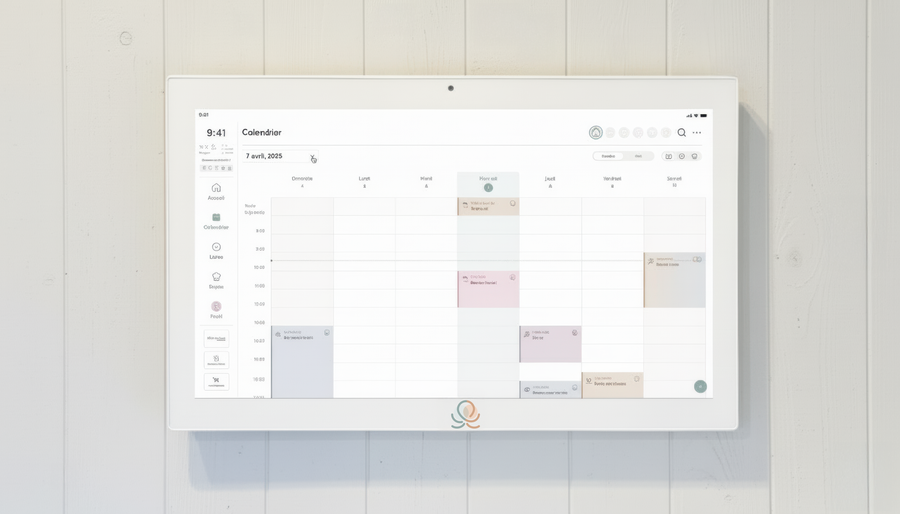
🚀 Find this article and much more in the Octave app (shared calendar, collaborative task list, meal planner, centralized family info and independence tracking), your number one ally for an organized family life! 📱✨
Put these tips into practice
Get the whole family organized with Octave
Meals, chores, the calendar and routines for the whole family in one place: on everyone's phone and on the Station on your wall.
The app is free on iOS and Android.