



The six levels of development: is your child ready?
16 October, 2025
As you know, at Les Belles Combines we believe in the importance of building children's independence, starting at the youngest age. With that in mind, we created the six chore levels, each level matching a different age, to give you concrete guidance in assigning chores to your children and so help them develop their precious independence.
The six chore levels
Level 1, age 3:
Now that your children have turned three, it's time to ask them to take a full part in the household chores! At this age, children are often still very happy to help you, so it's an excellent time to introduce them to some chores they can do easily, such as those shown on the Magnétos chore magnets for their level: folding washcloths, putting away their books, setting the table, putting away their toys and tidying their room. Here are a few tips that will encourage their full independence and the development of good habits in carrying out their little missions:
- Teach them right now to put away their toys and books immediately after using them, before getting anything else out. The younger they get in the habit, the more likely they are to do it naturally when they're older!
- For your toddlers to be able to set the table on their own, the utensils need to be easy for them to reach! So make sure to keep them in a drawer within their reach, rather than in the traditional top drawer.
- At age three, it can be hard for a child to understand exactly what “tidying your room” means. To help them with this chore, make sure to name each step clearly.
Level 2, age 4:
Your child is growing up, and now that they're about four or five years old, they're able to take on brand-new chores around the house! Here are the ones we suggest based on their level of development, and which are shown on our Level 2 Magnétos chore magnets:
- Washing fruits and vegetables
- Watering the plants
- Putting away their toys
- Clearing the table
- Drying the dishes
- Tidying their room
- Putting away their clothes
- Bringing their bedding to the laundry
- Feeding the pets
- Setting the table
- Putting away their books
- Folding hand towels
Here are also a few practical tips and tricks to help you encourage their independence in doing their chores:
- To help toys easily find their way back to where they belong, and to make them easy for your child to put away, sort them into categories using bins clearly labelled with pictograms, since children this age haven't learned to read yet.
- Is your child in charge of the all-important mission of watering the plants? Give them a spray bottle rather than the traditional watering can to make the job easier and, above all, to avoid unfortunate messes!
- Why not use dish-drying time to have fun with your child? Sing, dance, go wild and turn this moment into a pleasant activity your child will want to do again!
Level 3, ages 6 to 7:
Are your children now about six or seven years old, or do they almost perfectly master the Level 2 chores on our Magnétos? Then they're ready to move up to the next level and take on the following little missions with flying colours:
- Taking out the garbage and recycling
- Putting away the groceries
- Emptying the dishwasher
- Tidying their room
- Folding and putting away their clothes
- Bringing their bedding to the laundry
- Wiping and clearing the table
- Setting the table
- Feeding the pets
- Putting away their toys and books
- Drying the dishes
- Folding towels
- Washing fruits and vegetables
- Watering the plants
Even though they've grown, children this age often still need a little nudge to be fully independent in doing the chores assigned to them. Here are a few tips to help you get there:
- Want your children to help you put away the groceries, but hate seeing your pantry and fridge turned upside down afterward? Organize your space with clearly labelled bins so that every member of the family knows exactly where to put the different foods.
- At this age, children still need visual cues to know exactly what they have to do. Use our small routine charts to help them easily complete each step of their after-school routine, including, of course, doing a chore!
- Of course, your children won't fold their clothes exactly the way you would. Let them do this chore their own way, then simply explain how they could do better next time!
Level 4, ages 8 to 9:
Do your children have all of the Level 3 chores on our Magnétos down pat? Have they reached the age of eight or nine and are they ready to take on new challenges? Here are the new chores they're now able to do:
- Taking out the garbage and recycling
- Putting away the groceries
- Folding towels and their clothes
- Sorting clothes
- Making cookies or muffins
- Emptying the dishwasher
- Tidying their room
- Wiping the table
- Setting and clearing the table
- Feeding the pets and walking the dog
- Washing fruits and vegetables
- Watering the plants and tending the garden
- Dusting and sweeping
- Getting the mail
- Tending the garden
- Drying the dishes
If your children have been actively helping with chores since they were very young, they're probably already quite independent and need less and less of your help to carry out their various little missions. Still, here are a few tips that will help you build their independence even further and get their full cooperation:
- At this age, it's time to build your children's proactivity and get them to take the initiative to do chores themselves. To do this, at the start of the week, lay out all of the Magnétos for the chores to be done on a chore chart and ask your children to pick one each day themselves.
- Children are often naturally drawn to the kitchen by making cookies, muffins or any other dessert; to make it easier for them and let them prepare delicious snacks for the whole family, think about keeping all the baking supplies in one place: measuring cups and spoons, muffin and cake pans, spatulas, basic ingredients (flour, baking powder, cocoa, etc.), and so on.
Level 5, ages 10 to 11:
If your children are now ten or eleven years old and/or almost perfectly master the chores that make up Level 4 of our Magnétos, it's time to give them new missions to take on! Here is what they can now do, depending on their level of development:
- Folding towels
- Taking out the garbage, recycling and compost
- Putting away the groceries and washing fruits and vegetables
- Emptying the dishwasher
- Tidying their room, folding and putting away their clothes and bringing their bedding to the laundry
- Wiping, setting and clearing the table
- Walking the dog
- Watering the plants
- Dusting
- Getting the mail
- Raking leaves and tending the garden
- Sweeping and vacuuming
- Feeding and caring for the pets
- Washing and drying the dishes
- Cleaning the bathroom
- Sorting clothes and doing the laundry
- Making cookies or muffins
Your children are now almost teenagers, and they may be more reluctant to do their chores, preferring to spend more time having fun with their friends! Here are a few tips to motivate them to cooperate:
- If you'd like to reward them for their efforts, think about offering privileges they don't usually get easily: inviting a friend for a sleepover or a special activity, permission to stay up later, extra video game time, and so on. We bet that will be enough to motivate them to fully pitch in with the household chores!
- Don't hesitate to apply natural consequences to their choices. They forget to do their laundry every week? They'll run out of clean clothes to put on their backs! They don't cooperate when it's time to do their chores during the week? Cancel the special activities planned for the weekend, explaining that they need to use that free time to look after the house instead.
Level 6, age 12 and up:
That's it! Your children have now become teenagers and have reached the last level of our Magnétos chore magnets! At age twelve (or more!), they can now do all of the following chores, matching Level 6 of our Magnétos:
- Feeding and caring for the pets
- Walking the dog
- Washing the floors and vacuuming
- Washing and drying the dishes
- Folding and putting away towels and their clothes
- Washing fruits and vegetables and watering the plants
- Sorting clothes and doing the laundry
- Making cookies or muffins
- Mowing the lawn, raking leaves, tending the garden and clearing snow
- Taking out the garbage, recycling and compost
- Putting away the groceries
- Washing the windows and the car
- Bringing their bedding to the laundry
- Emptying the dishwasher
- Tidying their room
- Setting, clearing and wiping the table
- Cleaning the kitchen and bathroom
- Dusting
- Getting the mail
Of course, most children this age are now almost completely independent and so able to do most chores without your help. Still, here are a few tips to encourage their cooperation and get the most out of daily chores:
- If your teens spend a lot of time with their friends and therefore spend less time with you these days, take advantage of the moments when they're doing their chores to chat with them and make it all enjoyable, even if it means lending a hand!
- Are your kids asking for more independence? Set a number of chores that must be done each week, but let them choose for themselves the time that suits them best to do them. On Saturday, if their chores still aren't done, simply require that they stay home until they're completed.
Ready to move up to the next level?
Even if your child is the suggested age, are you unsure whether they're ready for the next level? These few signs should help you figure out whether it's time to move on to more complex chores!
- Efficient, quick execution: a task that used to take your child 15 minutes now takes half that, without missing any steps
- Satisfactory quality of work, even without supervision: the task is done not perfectly, but satisfactorily and according to the agreed standards, without supervision and every time it's done
- Boredom and disengagement: your child loses their intrinsic motivation now that the novelty of the task has worn off, and expresses a desire for bigger responsibilities
- Adequate motor development: some chores require physical strength, coordination and dexterity that are only developed to a certain level
- Following safety rules: your child is aware of the dangers some chores can pose, and no longer needs your constant supervision
Gradually introducing new chores
Introducing a new chore obviously doesn't happen overnight. So we suggest following these steps when the time comes to add another string to your child's bow.
-
Step 1: Break the task down into micro-steps (take the task apart into its simplest components).
- Step 2: Identify the prerequisites needed to do the task (if one of the micro-steps hasn't been mastered by your child yet, take the time to teach it before moving on to learning the whole task).
-
Step 3: Choose the right moment (a particularly stressful time or a time when your child is sick are not ideal moments to learn a new chore).
- Step 4: Model the whole task (do the entire task while your child watches you).
- Step 5: Gradually ask your child to take part (ask them to do certain steps, while guiding them and doing the harder steps yourself).
-
Step 6: Set up visual supports (for example, write all the steps for starting the washing machine on a sheet of paper, or use this printable for cleaning the bathroom or the kitchen).
- Step 7: Let your child do the task independently under your supervision (so you watch without stepping in, while answering any questions and reminding them of forgotten steps as needed).
- Step 8: Adjust and simplify the task as needed (break the task down further if necessary and identify possible obstacles).
- Step 9: Let your child do the task completely independently (take the time to check the first few times and offer your constructive feedback).
- Step 10: Celebrate this new independence!
Special needs
If your child has attention-deficit/hyperactivity disorder, an autism spectrum disorder or any other special need that creates difficulties in developing independence, here are a few strategies that could help your child climb the rungs of independence too, at their own pace:
- Enhanced visual supports: checklists with pictures, visual timers, colour coding for each step, etc.
- Maximum task breakdown: even a simple task deserves to be broken down into several micro-steps.
- Immediate rewards: whether it's a star on a motivation chart or earning a privilege, children with special needs often need quick gratification.
- Accepting a different pace: even if it sometimes seems slow to you, your child will develop independence too, at a pace and to a level that may differ from others, but they will develop it nonetheless!
- Celebrating the effort as much as the result: what is a simple task for others often takes much more effort for your child, so don't forget to take that into account!
The myth of “All X-year-olds are capable of...”
Do you like benchmarks, and do developmental milestones reassure you? We understand. But these averages don't account for the real diversity of human development, and for the factors that inevitably create variation: motor development, executive function development, the child's temperament, special needs, and so on.
Your child isn't a statistic: they're a unique individual with their own strengths, their own challenges and, above all, their own pace. Respect that!
The Belles Combines solutions
Our Magnétos come in packs, each matching a different level, so you can get only the ones that suit your child's age!
Our virtual family assistant automatically suggests chores based on your child's age; no need to think about it, we do it for you!
Time to take action
Take the time to work out, based on the description for each level, which level your child is at. Now all that's left is to assign them chores suited to their level of development!
Put these tips into practice
Get the whole family organized with Octave
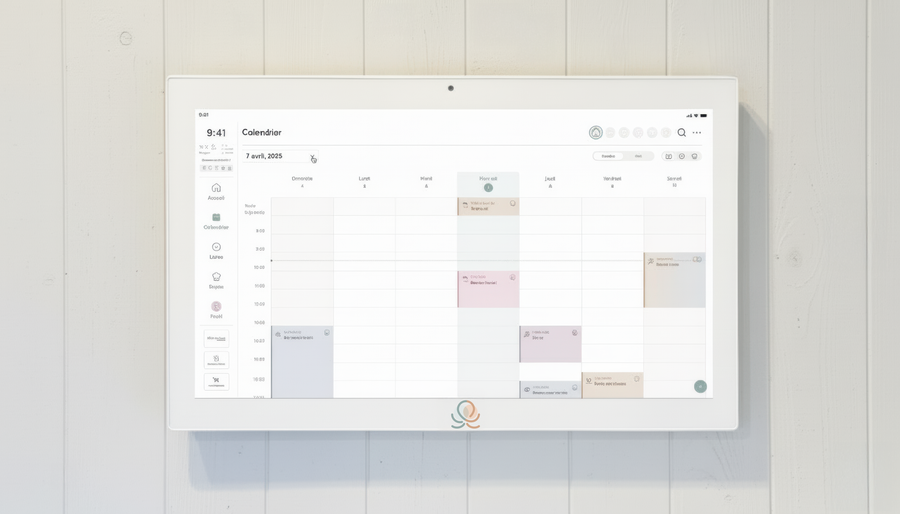
Meals, chores, the calendar and routines for the whole family in one place: on everyone's phone and on the Station on your wall.
The app is free on iOS and Android.