



The role of play in child development: activity ideas for every age
01 December, 2023
As a parent or a professional who spends time with children, understanding their limits and their progress at each stage of development helps us make sense of their behaviour, their frustrations, their rigidity, their moments of pride… and, above all, it guides us in choosing the activities we offer them, since, of course, children develop mainly through play.
Ages 0 to 2: Discovery through the senses
According to Piaget, little ones develop their understanding of what’s happening around them through their senses and motor skills. So, to help babies understand their surroundings, we stimulate their senses and let them move!
Here are a few activity ideas to try with them:
From 0 to 2 months, babies aren’t very open to the world yet and are still very focused on their own bodies and sensations. So, to stimulate them, you can show them high-contrast images (black shapes on a white background) and move them in front of their face, have them watch lights on the wall (with a flashlight), let them hear all kinds of music (play different styles, instruments and tones: you can find everything online!) and touch them with different textures (stroke their cheeks, hands, feet, arms, etc. with soft blankets, towels, feathers, your hands…).
From 2 to 4 months, babies start to open up more to their surroundings, so you can look at books with them (show them the pictures, read them the story), sing them songs and hold out different objects for them to grab.
From 4 to 8 months, babies become more and more interested in the results of their actions, like pressing the buttons on a toy that makes noise. You can keep up the reading and singing, but also offer them toys that make noise and react when they’re handled, with sounds or lights, for example.
From 8 to 12 months, babies’ behaviour becomes deliberate and they can now anticipate events, for example by knowing the result of an action, such as making noise with objects. You can give them things to bang and throw, whether toys or household items like (unbreakable) dishes and bowls.
From 12 to 18 months, babies try to explore every possible way of handling an object. They’ll want to throw it, bang it, hide it, bite it, etc. Offer them bins of water with containers to fill and empty, and textures to explore, like play dough, sand or soap suds. Let them handle objects as they please.
From 18 to 24 months, babies begin to develop their symbolic function, which allows them to picture objects or situations in their mind. For example, they’ll be able to tell you what sound a cat makes without seeing a picture of a cat or getting help to find the answer, because they can create a mental image of the animal on their own. You can play at imitating different sounds with them (animals, vehicles, etc.) and give them simple puzzles and shape sorters to help them make cause-and-effect connections.
Of course, talking to your baby is recommended at all times, along with telling them stories, interacting with them and stimulating their language during the different activities you offer them!
Ages 2 to 6: Symbolic thinking
One concept that sums up this period well is intellectual egocentrism: children can only understand the world from their own point of view. The best example of this concept is a toddler playing hide-and-seek who “hides” right in the middle of the living room by closing their eyes. To them, “if I can’t see me, nobody can see me!” Although limited by their egocentrism, children this age are now capable of symbolic thinking, which means they can form mental images of situations or objects. As a result, they can now imitate behaviours, which opens the door to their interest in make-believe play.
Since they love role-playing, they’ll be thrilled to act out situations, especially the ones they watch you go through every day!
Here are a few ideas. Include them in chores like sweeping, wiping surfaces, tidying up, etc., pretending to be house cleaners, or give them small roles in preparing meals (like mixing cake batter or cutting certain foods with a child-safe utensil). Set out various objects on a table, give them a bag and some scraps of paper or old cards (to use as bills or bank cards), and go “shopping.” Hide objects and invite them to find them using simple clues. Set them up with notebooks, pencils, all sorts of paper and maybe even a cardboard laptop so they can pretend to go to school or work. Use their interests to suggest roles for them to play. And if you have costumes to offer them, some kids will love it!
Ages 6 to 12: Concrete thinking
At this age, children develop a lot cognitively, and since they go to school, they can consolidate a lot of what they learn. Children understand their surroundings much better when things are concrete. So anything more abstract is harder to grasp, especially for younger kids. For example, math and numbers are abstract, but if you put them in context with things kids know (like pictures on an arithmetic worksheet), it’s easier. Children still enjoy role-playing, but they’ll enjoy it even more if the game is close to real life and “believable.”
Here are a few ideas. Suggest that they make a movie (if you have the equipment), guiding them through the different steps: writing the script, shooting the scenes, editing and watching the final result. Or they could write a novel, lay it out and illustrate it. Suggest that they go into business and start their own little company (cleaning, jewellery, artwork), and support their project by helping them create a logo, produce their creations and distribute them. Let them run a restaurant for one meal by having them create the menu, prepare the food and serve it. Set up a treasure hunt with a detailed map and riddles to solve, then invite them to create one of their own.
Of course, any art activity (drawing, painting, sculpture, crafts, etc.), any science experiment or any board game suited to the child’s age are options you can offer kids in the preoperational and concrete operational stages, depending on their interests. And remember: no matter what you do with them, as long as you’re available and involved, every aspect of their development (physical, cognitive and social-emotional) will be stimulated and will keep on blossoming!
Would you like first access to all the content published in the Magazine each month, plus our Toolbox, which includes, among other things, free downloads that are as practical as they are fun? Subscribe to Belles Combines Magazine today!
Put these tips into practice
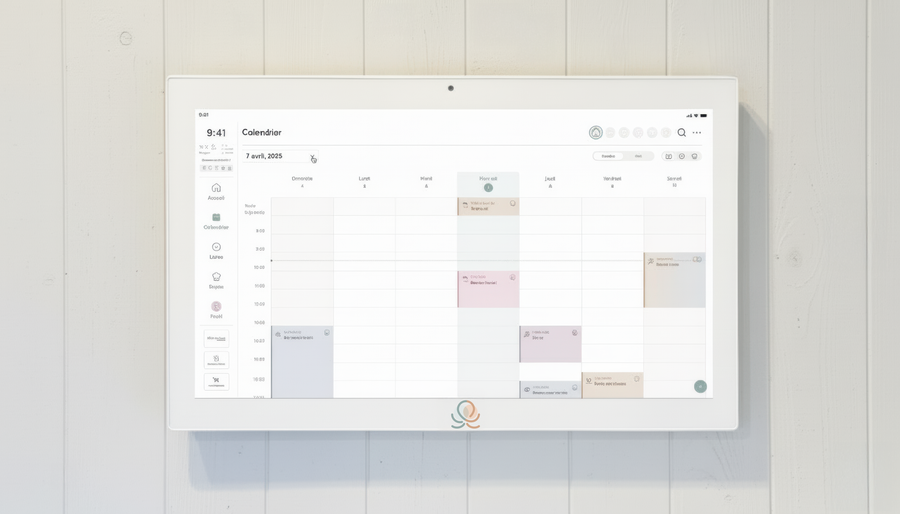
Get the whole family organized with Octave
Meals, chores, the calendar and routines for the whole family in one place: on everyone's phone and on the Station on your wall.
The app is free on iOS and Android.