



The nap, reinvented: a practical guide with real-life examples
07 March, 2025
The nap paradox
All parents know that good sleep is essential to a child's development. Yet the “sacred” nap often becomes a source of stress. Marcel Rufo reminds us that there are “big sleepers” and “restless little ones” – a diversity to be respected rather than fought. Sleep rhythms vary considerably from one child to another, as do their needs for rest throughout the day. This reality can create tension when naps are imposed at fixed times. Given these individual differences, it becomes crucial to take a more flexible, personalized approach to a child's sleep.
The 5 keys to a reinvented nap
1. Personalized quiet time
Principle: Replace the compulsory nap with a free break time.
Real-life example: When Laurier, age 2, had to take a nap, big brother Louis, age 4, no longer felt the need for one. To avoid conflict, we set a simple rule: everyone in their own room, but Louis could choose his own quiet activity. He often took his favourite books or his little cars to play with quietly. This compromise turned a potentially tense moment into a peaceful routine, and at the same time encouraged Louis's independence, since even at 4 he had big-kid privileges.
2. A free-choice nap space
Principle: Create cozy corners in different rooms of the house.
Real-life example: Marie surprised us with her initiative. At 3, she started building her own “nest” in the playroom. She would take her favourite cushion and her fish-patterned blanket and sometimes settle in under the little drawing desk. We followed her lead by creating a few comfortable spots here and there around the house.
3. The positive shared nap
Principle: Turn nap time into a moment of parent-child connection.
Real-life example: With the arrival of Raoul, Renaud and Léo, we discovered the power of physical contact. When they're tired, they naturally come to snuggle up against us on the couch. These moments create a gentle transition to sleep, with no struggle or negotiation. Once they're asleep, we lay them down on the couch and go about our business.
4. Gentle imitation
Principle: Use the example of the youngest to encourage rest in the older ones.
Real-life example: When Renaud sees his little brother falling asleep for a nap, he often lies down beside him, a toy in his hands. He then starts humming a song. It's not unusual for him to end up falling asleep too. This natural imitation creates an atmosphere of shared calm. When they're looked after by their grandparents, it's often during Grandpa's nap, when the house is bathed in total quiet, that the two little ones fall asleep spontaneously.
5. Guided self-regulation
Principle: Trust the body's natural signals of tiredness.
Real-life example: To our great surprise, Marie developed a remarkable awareness of her need for rest. One day, in the middle of playing, she announced: “I'm tired, I'm going to go night-night for a bit.” She set up her nap corner and fell asleep on her own. This ability to listen to herself developed naturally, without pressure or force.
Conclusion
This flexible approach has allowed us to:
- Eliminate conflicts around sleep
- Respect each child's unique rhythm
- Keep calm moments that benefit the whole family
- Develop independence and self-awareness
Napping is no longer an obligation but an opportunity for rest that each child learns to seize in their own way.
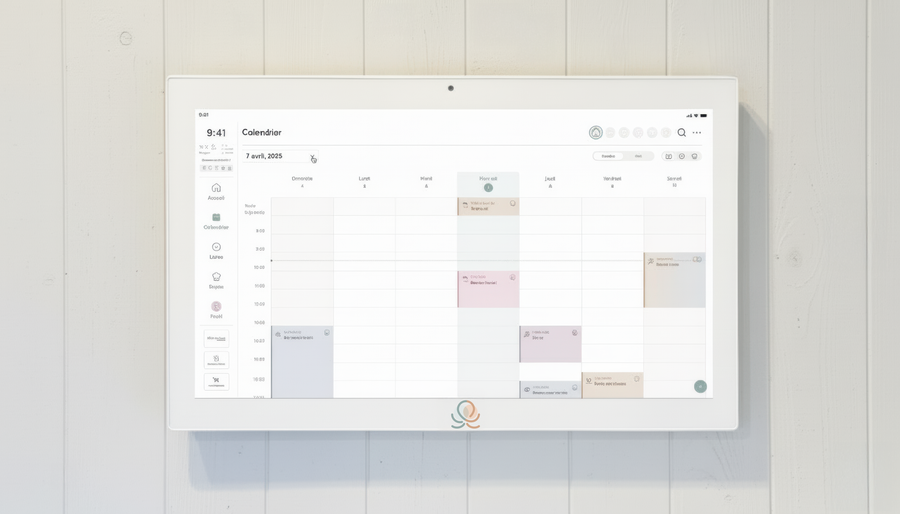
🚀 Find this article and much more in the Octave app (shared calendar, collaborative to-do list, meal planner, all your family info in one place and independence tracking) – your number one ally for an organized family life! 📱✨
Put these tips into practice
Get the whole family organized with Octave
Meals, chores, the calendar and routines for the whole family in one place: on everyone's phone and on the Station on your wall.
The app is free on iOS and Android.