



The child who resists routine: a troubleshooting guide
10 October, 2025
You've set up a clear morning routine. You've explained it, illustrated it, and you even use our tools diligently. And yet every morning you have to negotiate. Your child dawdles, forgets, sometimes even flat-out refuses to cooperate. Before concluding that routines “don't work with your child,” you first need to take the time to analyze precisely what isn't working!
The diagnosis in three essential questions
Question 1: Does the child KNOW the routine?
The answer to this question often seems obvious, but it's often an important point that deserves attention. Does your child really know what's expected of them and in what order?
For ages 3 to 5: The routine has to be visual. Pictures or pictograms the child can refer to are therefore necessary, since a child this age simply can't remember a verbal list of 6 steps.
For ages 6 to 8: Children this age who have learned to read can generally understand a simple written list with drawings that go with each step. But watch out: understanding once doesn't mean having memorized. So repetition is absolutely necessary to truly take the routine on board!
For ages 9 to 12: At this age, your child should now know the routine by heart. If that's still not the case after several weeks, it may be too complex or include too many steps.
Question 2: CAN they do what's being asked of them?
Does your child have the physical, cognitive and emotional abilities needed to carry out each step of the routine independently?
Physical abilities: Can a 4-year-old really tie their shoelaces? Reach the bowl stored in the top cupboard? Pour their milk without spilling it? If a step in the routine requires a skill they haven't mastered yet, they may resist out of frustration or passively wait for you to do it for them.
Cognitive abilities: A 5-year-old can't “manage their time” intuitively. Since they have no idea how many minutes they have left to finish a step of their routine, demanding that they get dressed “quickly,” without a visual aid for time, is unrealistic.
Emotional abilities: Some mornings, an anxious or tired child simply doesn't have the emotional energy to function independently, even if they're normally capable of it. It also happens that transitions are simply harder for some kids!
To help you pinpoint more precisely what your child is capable of doing at their age, check out our Independence Path, available in our online magazine as well as in our Octave app.
Question 3: Can they INITIATE the action on their own?
Knowing and being able to do something doesn't guarantee that the child will think to do it on their own. Initiation – that click that says “okay, it's time to get started” – is in fact a complex executive function.
For ages 3 to 6: Spontaneous initiation is almost nonexistent. These kids need a clear external signal to get going: a timer, a song, your voice, etc.
For ages 7 to 9: At this age, initiation is developing but remains fragile. A child distracted by a toy won't hear your verbal reminder; they need recurring visual or auditory cues.
For ages 10 to 12: Between the ages of 10 and 12, initiation should work most of the time, but it's easily compromised by fatigue, stress or distractions (like those famous screens, for example!).
These three questions should help you tell voluntary resistance (generally quite rare) apart from the real obstacles that keep the child from carrying out their routine.
Conversation scripts by situation
When your child resists, the words you choose often make all the difference. Here are some possible conversation scripts for the three most common scenarios.
Situation 1: Total refusal
What's happening: Your child crosses their arms and flat-out refuses to take part in the routine (with screaming and crying often thrown in as extras!).
The reaction to avoid (ideally!):
- “You don't have a choice, you MUST do it!”
- “Stop putting on a show, it's not that hard!”
- “If you don't do it, there will be a consequence!”
Effective script for ages 3 to 6:
“I can see you really don't want to get dressed right now. It's hard to leave your game, huh? I'll give you two choices: you can get dressed in your room, or you can do it in the living room. Which do you prefer? If you want, I'll help you get started.”
Effective script for ages 7 to 10:
“You seem really upset this morning. What's especially hard today? Okay, I understand you're tired. The routine has to stay the same, though, but we can adjust how we do it. Do you want to set a 10-minute timer and see how many steps you can get done? Or would you rather I stay with you while you get dressed?”
Effective script for ages 11 to 12:
“I've noticed mornings are getting more and more tense. I think it would be good for us to talk about it together tonight. For now, what would help you get through the morning more easily? The routine isn't changing, but maybe we can find a way that works better for you?”
Situation 2: The professional dawdler
What's happening: Even if the child doesn't refuse outright, each step of the routine takes forever. They daydream, get distracted and find a thousand and one reasons not to make progress.
The reaction to avoid (ideally!):
- “Hurry up!” (often repeated a dozen times!)
- “Are you doing this on purpose or what?”
- “We're going to be late because of you!”
Effective script for ages 3 to 6:
“Looks like your body is moving in slow motion this morning! Does your body need some help to go faster? Look, I'm setting the timer. When it rings, we have to be done getting dressed. Do you think you can do it?”
Effective script for ages 7 to 10:
“I notice you're taking a lot of time this morning. Is something distracting you? Ah, your book is distracting you! Okay, we'll put it on the table and you can pick it back up after the routine. Look at your list: there are 3 steps left. How long do you think that will take? Perfect, let's start the timer!”
Effective script for ages 11 to 12:
“You were planning to leave at 7:45, it's now 7:50 and you're not dressed yet. What happened? Okay. So what's your plan for managing your time differently tomorrow? I don't want to have to remind you constantly – how can we make you more independent?”
Situation 3: The chronic forgetter
What's happening: Every day, they “forget” steps of the routine. Their bag isn't ready, their teeth aren't brushed, their lunch is still on the counter.
The reaction to avoid (ideally!):
- “I've already told you 100 times!”
- “Why don't you ever listen?”
- “You always forget everything!”
Effective script for ages 3 to 6:
“Oh no, we forgot to brush your teeth! Let's go look at our routine chart together. Ah, look: brushing teeth comes right after getting dressed. Tomorrow, when you see the picture of the clothes checked off, you'll remember to look at which picture comes next. I'll help you remember.”
Effective script for ages 7 to 10:
“Your lunch was left on the counter again. That's three times this week. Clearly, something isn't working in our system. What could help you remember to bring it? Should we put a sticky note on the door? Set an alarm on your watch? What if you put your bag right in front of the door as soon as your lunch is in it?”
Effective script for ages 11 to 12:
“You forgot your gym clothes for the third time this month. I know it's annoying for you and that it stresses you out at school. How could we create a system that works? It's your responsibility to remember to bring them, but I can help you set up some tools. What would work for you?”
The goal of these scripts is obviously not to reproduce them perfectly, but to create a dialogue that helps identify the real obstacles and build solutions together.
The anti-resistance kit: three tools to put in place
Sometimes resistance persists despite your best communication efforts. That's when it's time to introduce concrete tools that give your child some power back while letting you maintain the structure that's needed.
Tool 1: The choice board (suited to ages 4 to 10)
The principle: Give the child limited control over the order of some steps of the routine.
How it works:
Create a board with four to six of the more laborious routine steps in the form of cards (drawn, printed or written). Two or three of these steps should be fixed (for example, “getting dressed” has to come before “putting on shoes”), but the child can choose the order of the others.
Concrete example – morning routine:
- Fixed steps: Get dressed first, shoes last
- Steps to put in whatever order the child chooses: Breakfast, brushing teeth, doing their hair, packing their bag
Why it works:
Resistance often comes from a feeling of losing control. By letting the child personalize their routine each day, you turn an outside imposition into a personal choice. They become an active player in their routine rather than a victim of your instructions!
Tool 2: The joker card (suited to ages 6 to 12)
The principle: Once a week, the child can use a “joker card” that lets them skip one non-essential step of the routine.
How it works:
Together, identify 2 or 3 routine steps that can be negotiable (that is, not essential to safety or basic hygiene). Here are a few examples: making their bed, putting away their toys, choosing their clothes the night before.
Give your child a physical card, which you can even take the time to make together. Each week, they can then use it ONCE to skip one of the steps decided on in advance.
Why it works:
This tool teaches several valuable skills: weighing priorities, managing a limited resource and making strategic choices. The child learns that they have the power to adjust things, without everything becoming permanently negotiable.
Tool 3: The energy thermometer (for ages 5 to 12)
The principle: Let the child indicate their energy level or emotional state before starting the routine, so you can adjust your support accordingly.
How it works:
Create a simple visual thermometer with 5 levels:
- Empty / exhausted / very hard today
- Low / tired / I need help
- Medium / okay / I can try
- Good / feeling good / I can do it
- Great / full of energy / I'm going to be fast!
Before starting each of their daily routines, or before the one that's generally harder for them, the child points to or colours in their energy level. Depending on what they indicate, you can then adapt your presence and your level of support.
Why it works:
This tool validates the child's emotions and provides a shared language for talking about how they're doing in the moment. Instead of guessing or interpreting their resistance as bad will, you get clear information easily and quickly. And the child also learns how to assess themselves, a valuable skill!
The “When/Then” technique vs. threats
When resistance persists, many parents fall into the trap of threats. It's tempting, of course, and sometimes even effective, but it's counterproductive. Here's an alternative that gets cooperation without hurting the relationship.
Why threats don't work in the long run
Threats create a relationship based on fear and power. Your child obeys out of fear of the consequences, not because they understand why the routine matters. The result: as soon as you're not there to watch and punish, the routine tends to fall apart.
What's more, using threats often leads to escalation, where everyone gets caught in an exhausting cycle that nobody wins!
The When/Then formula
The principle: Establish a logical, predictable sequence between the routine and what comes after, with no punishment or artificial reward.
The structure: “When [routine action], then [natural enjoyable activity].”
Concrete examples:
Instead of “If you don't hurry up, you're not going to the park!” say “When you've finished getting dressed and eating breakfast, then we can go to the park.”
Instead of “No tablet until your room is tidy!” say “When your evening routine is done, then you'll have your free time for the tablet.”
Instead of “You're going to bed with no story if you keep that up!” say “When you're in your pyjamas with your teeth brushed, then we'll have time to read together.”
A 2-week action plan
Of course, your child's resistance won't disappear overnight. Here's a progressive plan that will let you transform the dynamic with your child within two weeks.
Week 1: Observation and adjustments
Days 1 to 3: Diagnosis without intervening
Take the time to simply observe and take notes (mental or written):
- At what precise moments does the resistance show up?
- Which steps cause the most trouble?
- At what time of day does your child's energy drop?
- Are there recurring scenarios?
Do the three-question test every day: Do they know? Can they? Do they initiate?
Days 4 to 5: Conversation and co-creation
Choose a calm moment (obviously not in the middle of the resistance!) to talk with your child.
“I've noticed our mornings are often hard. I'd like us to find solutions together. What makes the routine hard for you?”
Take the time to really listen to their answer: no justifying, no downplaying.
Then present ONE tool from the anti-resistance kit (choice board, joker card or energy thermometer) to your child and explain how it works. Let them choose which one they'd like to try.
Days 6 to 7: Putting the chosen tool in place
Introduce the selected tool and explain the new “when/then” rule that will now be applied.
“From now on, when your morning routine is done, then we'll have time for [activity they like] before we leave.”
For these first two days of putting it in place, try to be as present as possible to guide, support and encourage your child, without expecting perfection right from the start!
Week 2: Consistency and gradual independence
Days 8 to 10: Consistent application
It's time for absolute consistency! The “when/then” rule must then be applied every day, with no exceptions and no negotiation. Your tone should ideally stay calm and neutral.
If your child resists:
- No anger
- No lectures
- No endless reminders
Instead, tell them: “I can see you're not ready, but the routine has to be finished so we can [activity]. I'm here if you need help.”
Then you walk away. If they finish their routine: celebrate briefly. “You did it! We have time now.”
If they don't finish it, you apply the natural consequence, nothing more: “We didn't have time for [activity] this morning. Tomorrow, you can choose differently.”
Days 11 to 12: Adjustments
Observe what's working and what's still causing problems. Maybe the chosen tool doesn't quite fit your reality and/or your child's personality? So it's time to consider trying another one.
Days 13 to 14: Gradually stepping back
Start withdrawing gradually. Stay available, but stop supervising every step and let your child take the lead instead.
If the routine goes well, say nothing; your silence is a form of trust. At the end, a simple “You took good care of your routine this morning” is enough.
If things aren't going the way you'd like, step back in briefly: “You seem stuck. What do you need?”
At the end of the 2 weeks: Evaluation
When the two weeks are over, take 15 minutes to take stock:
- What has improved?
- Where do difficulties remain?
- Is your child showing more independence?
- Is the family atmosphere less tense?
If problems persist, go back to the diagnosis: maybe a step needs to be simplified, or another tool deserves to be added.
Taking action
Now is the time to choose the tool that best fits your family's reality and give it a try. Give it a go for at least three days and reassess the situation; if the problem situation has improved, great! If not, think about picking a new tool and starting the process over, until things get better.
Put these tips into practice
Get the whole family organized with Octave
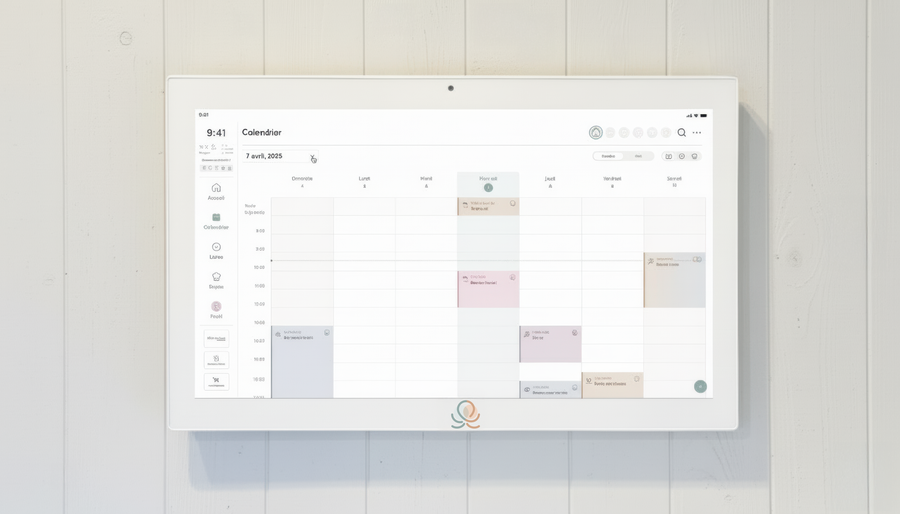
Meals, chores, the calendar and routines for the whole family in one place: on everyone's phone and on the Station on your wall.
The app is free on iOS and Android.