



Teaching kids generosity during the holidays
16 December, 2025
The holiday season, a time that usually means sharing and gathering, is a prime moment to pass on values of generosity and empathy to children. In a society where consumption plays a particularly big role, December is a good opportunity to teach children the important values associated with the holidays.
Modelling generosity every day
You probably already know this: children learn mainly by watching. So before teaching them generosity explicitly, it's important to practise it yourself in a way your children will notice. When you make a donation to a charity, take the time to explain to your children why this gesture matters to you. In the same way, when you help a neighbour or give your time to a cause, invite them to come along when possible.
These moments become living lessons with far more impact than any speech could have. Children understand in concrete terms that generosity is an integral part of your family life and that it shows up in many ways, not just through money.
Taking part in charitable activities as a family
Turning generosity into collective action strengthens its educational impact. For example, you could visit a food bank together to volunteer, take part in a toy drive for families in need, or prepare food baskets for the annual guignolée, Quebec's traditional holiday food drive. These experiences let children see first-hand the realities other families live with and develop their social awareness at the same time.
Of course, make sure to choose activities that suit your children's ages. Younger kids can sort canned goods or wrap gifts, while teens can get involved in more complex tasks like serving meals or organizing a fundraiser. What matters is that every child feels useful and capable of making a real difference.
Starting a pre-Christmas decluttering tradition
A few weeks before Christmas, suggest that your children go through their toys, books and clothes to identify what they no longer use. Explain that these items in good condition could bring a lot of joy to other children who often aren't lucky enough to have as much as they do. This approach teaches them that giving not only helps others, but also makes room to receive, on top of avoiding waste and overconsumption.
Make sure to keep this moment positive; the point isn't to force them to part with their belongings, but to help them understand the value of sharing. Let them choose for themselves what they want to give, to build their independence and their sense of pride in their generous gesture.
If you like, you can even make it a new tradition and adopt the reverse advent calendar concept starting this year!
Encouraging handmade gifts
Invite your children to create gifts for their loved ones instead of simply buying something. This creative approach teaches them that generosity isn't measured by the money spent, but by the attention and time invested: a framed drawing for Grandma, decorated cookies for the neighbour or a personalized craft for their siblings become meaningful gifts that are generally just as appreciated!
Setting up a gratitude ritual
Along the same lines, try to cultivate gratitude in your children during this season of abundance. Before opening gifts, for example, take a moment to name together the people and things you're grateful for.
After the holidays, encourage them to write or draw thank-you cards for the gifts they received. This simple gesture teaches them to recognize other people's generosity and to appreciate it sincerely.
Adapting the message to their age
Toddlers understand generosity through concrete, immediate gestures, like sharing a toy, while school-aged children can grasp more abstract concepts like helping someone they don't know. Teenagers, for their part, can think about broader social issues and get involved in causes that touch them personally.
Finally, by teaching your children generosity during the holidays, you're giving them far more than one-off lessons; you're passing on values that will shape their character and enrich their whole lives, while helping to build a more caring and empathetic society.
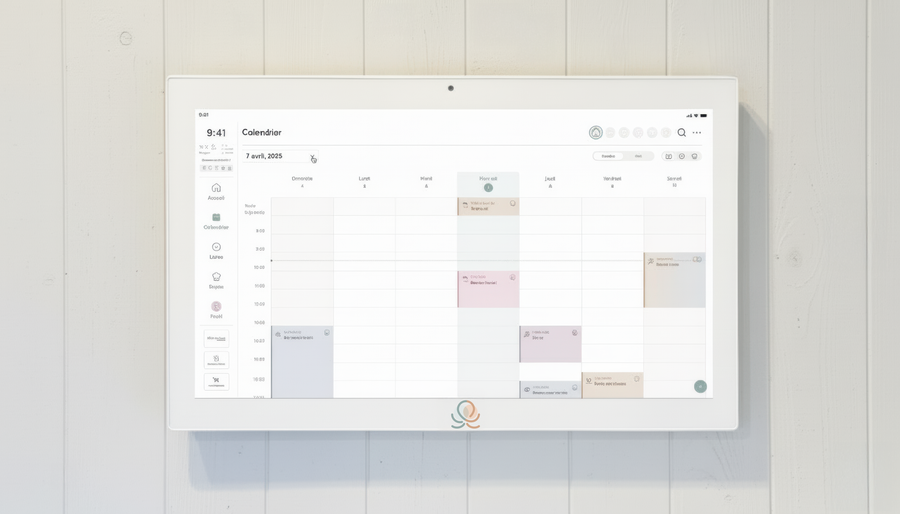
Put these tips into practice
Get the whole family organized with Octave
Meals, chores, the calendar and routines for the whole family in one place: on everyone's phone and on the Station on your wall.
The app is free on iOS and Android.