



Simple game suggestions based on your child's age
01 February, 2022
The child from 2 to 6 years old
At this age, Piaget talks about intellectual egocentrism: a child can only understand the world from their own point of view. The best example to illustrate this concept is a toddler playing hide-and-seek who “hides” right in the middle of the living room by closing their eyes. To them, “if I can't see you, you can't see me”! Although limited by their egocentrism, a child this age is now capable of symbolic thought, which means they can form mental images of situations or objects. So they're now able to reproduce behaviours, which makes room for this interest in pretend play.
Simple play as your child develops
Let's sum up Jean Piaget's theory of cognitive development: I present it as the study of how human reasoning abilities evolve.
From birth, babies learn to understand their environment, and this understanding evolves within the limits of their brain capacities. Piaget proposes different stages to explain how, at different points in childhood, little humans understand things and reason about them. The foundations of this theory are a practical tool to guide parents in the activities to offer them, which can be anything but complicated and can be carried out with the greatest simplicity!
The child from 0 to 2 years old
Piaget explains that toddlers learn to develop their understanding of what's going on around them through their senses and motor skills. To help a baby understand their environment, we stimulate their senses and let them move!
Piaget explains that toddlers learn to develop their understanding of what's going on around them through their senses and motor skills. To help a baby understand their environment, we stimulate their senses and let them move!
Suggested activities:
- Place household objects around the baby, at a distance that lets them grab them on their own. Let them handle them, throw them, bang them together. Do it in front of them, naming the objects, their texture and/or their sound.
-
Offer them tubs filled with water, along with containers to fill and empty, and textures to feel (use what you have at home: cooked pasta, dried legumes, soap suds, soil, etc.). Let them handle the objects however they like.
Suggested activities:
- Include them in chores such as sweeping, wiping surfaces, tidying up, etc. by pretending to be a house cleaner, or give them small roles in meal preparation (like mixing a cake batter or cutting certain foods with a safe utensil).
- Arrange various objects on a table, give them a bag and some scraps of paper or old cards (to make banknotes or bank cards), and go “shopping”.
- Hide objects and invite them to find them using simple clues.
-
Set them up with notebooks, pencils, assorted papers and maybe even a laptop made out of cardboard so they can play pretend school or work. Use their interests to suggest roles to play. If you also have costumes to offer, some kids will love it!
The child from 6 to 12 years old
At this stage, children make big cognitive leaps and, since they go to school, they can consolidate many learnings. Children understand their environment much better when it's concrete. So anything more abstract is harder to grasp, especially for the youngest. For example, math and numbers are abstract, but if we put them in context with things they know (like drawings on a math exercise), it's easier. Children still like role-playing games, but they'll like them even more if the game is close to reality and “believable”.
Suggested activities:
-
Offer to let them make a movie (if you have the necessary equipment) by
guiding them through the different steps: writing the script, shooting the scenes, editing and watching the final result, or even writing a novel, laying it out and illustrating it.
- Suggest they go into business and create their own little company (cleaning, jewellery, artwork) and support their project by helping them create a logo, produce their creations and distribute them.
- Let them run a restaurant for the length of a meal by letting them create the menu, prepare the food and serve it.
- Put together a treasure hunt with a detailed map and riddles to solve and suggest they create one of their own in turn.
Would you like to be the first to see all the content published in the Magazine each month, and have access to our Toolbox, which includes free downloads that are both practical and fun? Subscribe to Belles Combines Magazine now!
Put these tips into practice
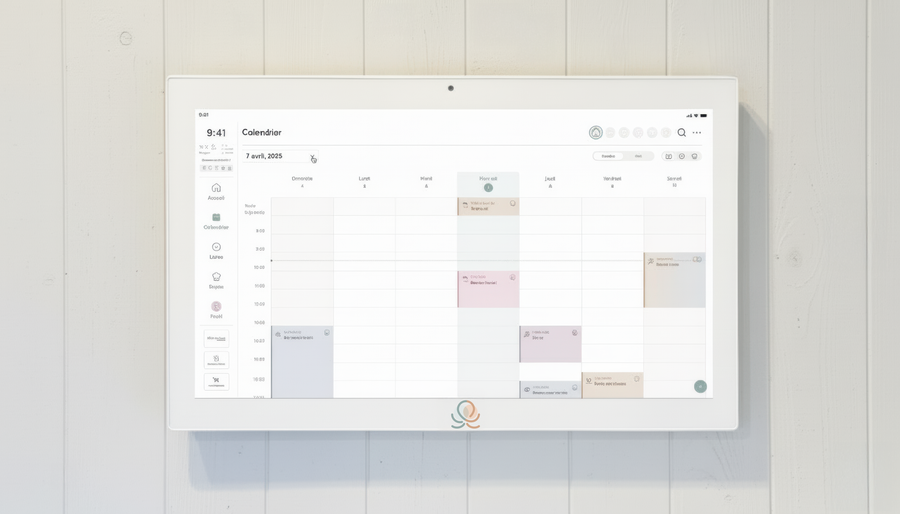
Get the whole family organized with Octave
Meals, chores, the calendar and routines for the whole family in one place: on everyone's phone and on the Station on your wall.
The app is free on iOS and Android.