


“Risky play”: an alternative to screens?
02 February, 2024 • Par Natacha Langlois
It's been in the news a few times over the past few days: the Canadian Paediatric Society recently issued new guidelines in favour of “risky play”.
But what exactly is “risky play”?
We're talking about playing at heights or at high speeds, supervised activities involving bumps and crashes or tools like hammers, ropes or knives, and games where kids might disappear from an adult's view or even get lost (briefly!). The Canadian Paediatric Society defines risky play as a “thrilling and exciting form of free play” that involves “uncertainty of outcome” and “a possibility of physical injury.”
And what are the benefits of this type of play?
There are plenty! According to Dr. Émilie Beaulieu, a pediatrician and the author of the Canadian Paediatric Society's new guidelines, risky play “helps children build their self-esteem and develop their physical skills. We see a lot of positives in the social interactions between children.” Since the child is the one in control in this type of activity, it allows them to develop their creativity and push their limits, while of course staying within the comfort zone that's right for them. Finally, “risky play” is believed to have beneficial effects on anxiety and on children's overall physical fitness.
A parallel with screens
As Dr. Beaulieu points out, “when we talk about ‘risky play’ with adults, it often reminds them a little of the way we used to have fun when we were younger, when there were no screens, when kids spent most of their time outside and weren't necessarily on play structures in highly regulated parks.” And what if “risky play” could give kids stimulation that's just as good as, if not more interesting than, what they get from video games and other screen activities? And what if it were a way to motivate kids to explore and play outside more, away from adults' tendency to constantly eliminate every potential risk of injury, however minor? As screens take up more and more room in the lives of kids and grown-ups alike, it certainly makes sense to rethink the limits we set for kids so they're encouraged to play freely more often, while reaping the many benefits that “risky play” can offer them.
Making room for “risky play”
Since the right kind of “risky play” obviously varies from one child to the next depending on their age and stage of development, at Les Belles Combines we have our very own way of making room for it so that it stays appropriate and safe!
The Charter of Responsibilities and Freedoms
To encourage kids to become more independent, we also need to give them new freedoms along the way: walking or biking alone within a set area, playing outside unsupervised, using certain kitchen tools and utensils, and so on. With that in mind, we created our Magnétos chore magnets, organized by level, so that the more complex the chores we ask of a child become, the more new freedoms they gain. Those freedoms also expose them to more risks, which we can then explain to them while giving them responsibility so they can keep themselves safe.
Of course, “risky” definitely doesn't mean “dangerous”. “The parents' role is still to eliminate potential dangers,” says pediatrician Émilie Beaulieu. That's why it's always essential to provide supervision in any situation where a child isn't able to assess the potential risks and recognize the real dangers.
So, are you ready to loosen the reins a little?
Would you like first access to all the content published in the Magazine each month, plus our Toolbox, which includes, among other things, free downloads that are as practical as they are fun? Subscribe to Belles Combines Magazine today!
Put these tips into practice
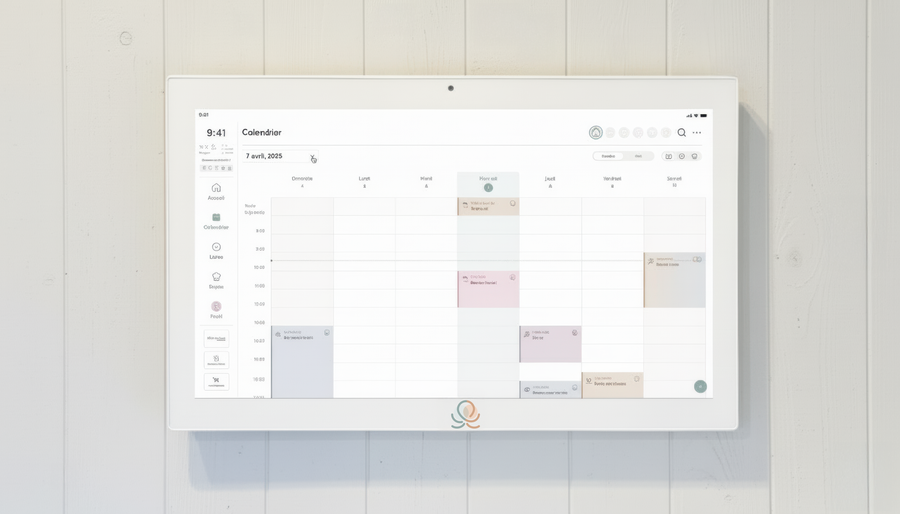
Get the whole family organized with Octave
Meals, chores, the calendar and routines for the whole family in one place: on everyone's phone and on the Station on your wall.
The app is free on iOS and Android.