



Managing jealousy and rivalry between siblings
16 February, 2026
“Mom, it's not fair!”
“He always gets the biggest piece!”
“Why does she get to and I don't?”
Do these sentences sound familiar? Welcome to the world of sibling rivalry! Jealousy between brothers and sisters is one of the most common – and probably most exhausting – challenges of family life. But rest assured: it's also completely normal!
So here are a few tips to help you navigate these sometimes turbulent waters with (a little!) more serenity.
Why does jealousy exist?
First, it's important to understand where this famous rivalry comes from. Children aren't jealous out of meanness or to make your life difficult; sibling jealousy actually comes from a basic need: to feel loved, important and valued in their parents' eyes.
Every child wants their own unique place in the family. So when they perceive (rightly or wrongly) that another child is getting more attention, affection or privileges, their brain interprets it as a threat: “What about me? Do my parents love me as much?”
The good news? This jealousy proves that your children love you and want your love in return. It's a sign of healthy attachment, even if it doesn't always show up in pleasant ways!
Mistakes to avoid
1. Comparing your children
“Look how nicely your sister tidies her room, maybe you should do the same!”
Why it's a problem: Comparisons create competition and resentment. The “lesser” child feels devalued, and the “better” child feels pressure to perform at all times.
What to do: Value each child individually for their own strengths. “I noticed you put your books away. Thank you!”
2. Aiming for perfect equality at all times
Giving everyone exactly the same thing, counting cookies, measuring portions down to the millimetre...
Why it's exhausting (and ineffective): Strict equality is impossible to maintain and creates a bookkeeping mentality. Children end up spending their time watching who gets what instead of simply enjoying what they have.
What to do: Aim for fairness rather than equality. With that in mind, each child receives according to their needs, their age and the circumstances of the moment. “Since you're older, you can stay up later. When your brother is the same age, it'll be the same for him.”
3. Stepping into EVERY conflict
At the slightest squabble, you rush over to referee, settle, sort it out...
Why it backfires: Your children never learn to resolve their conflicts themselves and always depend on you to settle their disputes.
What to do: Let them try to sort it out on their own first (obviously, if there are no signs of aggression!). Step in only if necessary, and guide them toward a solution rather than imposing yours. To help them, you can also point them to this handy printable!
Strategies that really work
1. One-on-one time with each child
The most powerful antidote to jealousy: 15 to 20 minutes a week alone with each child, where they get your full, undivided attention.
How:
- Block off this time on the calendar (by noting it in your Octave app, for example!)
- Let the child choose the activity
- Zero phones, zero distractions
What it changes: Your child feels that they have THEIR own unique place in your heart. Their emotional tank fills up, reducing the need to seek your attention through jealousy.
2. Teach empathy rather than forcing sharing
When a child refuses to share their toy:
Instead of saying: “Give it to your sister, you have to share!”
Try this instead: “I see you want to keep your truck. Your sister looks disappointed. How could we make it so you're both happy?”
What it teaches: Your children learn to consider other people's needs while respecting their own, a far more valuable skill than forced sharing.
3. Create moments of sibling teamwork
Organize activities where your children work together:
- Build a fort together
- Prepare a surprise for Dad/Mom
- Complete a shared creative project (a mural or a cake, for example)
- Play cooperative games where they win or lose together
These moments let children build positive memories together and learn that they're a team.
4. Normalize negative emotions
When your child says, “I hate my brother!”:
Instead of saying: “We don't say that! That's not nice!”
You can say: “You're really mad at him right now. It's okay to be angry. What happened?”
Validating the emotion doesn't mean accepting inappropriate behaviour. This way of responding does, however, let the child express what they feel without shame, and so opens the door to a real conversation.
When should you step into conflicts?
Step in right away if:
- There is physical violence
- There is serious verbal violence (hurtful insults, humiliation)
- A child is truly distressed
Let them handle their dispute on their own if:
- It's a “normal” argument with no danger
- They're able to communicate (even if it's noisy!)
- No one is crying or hurt
Your role as referee:
- “I see you two have a problem. Can you sort it out together, or do you need help?”
- If help is needed: “Each of you explains your point of view, and then we'll find a solution together.”
What you have to accept
Sibling rivalry will never disappear completely. Even siblings who adore each other will go through moments of jealousy and conflict at one time or another.
So your goal isn't to eliminate all rivalry, but to:
- Reduce the intensity and frequency of conflicts
- Teach your children to manage their emotions appropriately
- Teach them to resolve conflicts respectfully
- Create enough positive moments to outweigh the negative ones
Finally, remember this:
By navigating these conflicts with patience and teaching your children to manage their emotions and disagreements, you give them relationship skills that will serve them for life! ❤️
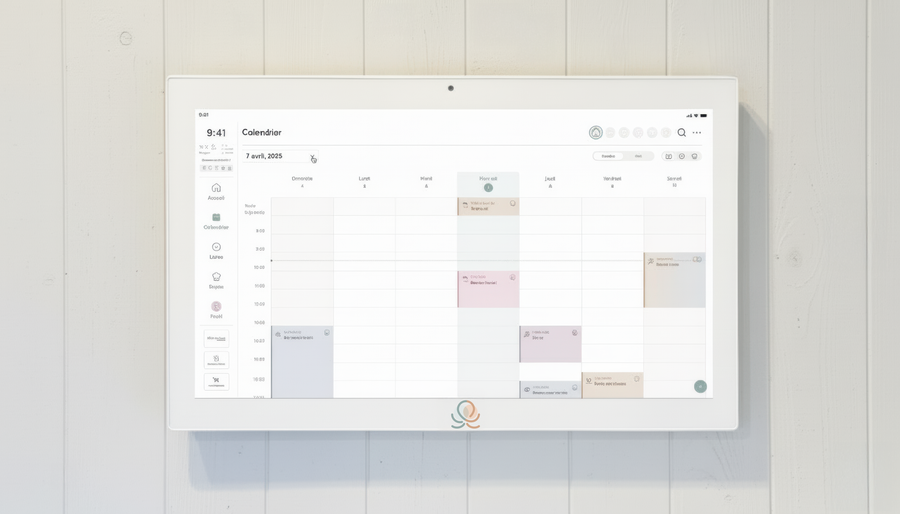
Put these tips into practice
Get the whole family organized with Octave
Meals, chores, the calendar and routines for the whole family in one place: on everyone's phone and on the Station on your wall.
The app is free on iOS and Android.