



In summer, I keep learning... just differently!
15 June, 2018
Summer is coming, and for many families, July and August mean a break from the school routine and a little more time for fun. Summer may be all about vacation, but as parents, we like our little ones to keep learning, growing and thriving all year long.
Before going any further, though, let's keep in mind that children are naturally curious and love to learn. During the school year, learning generally happens more formally at school, whereas summer is the time to explore, discover and learn while having fun! So in this article, I'm sharing a few simple ideas you could easily put in place this summer to feed your little ones' curiosity and nurture their love of learning.
Heads up! We're feeding their general knowledge!
Reading, writing and counting are very important skills that kids work on at school and use every day. General knowledge, on the other hand, covers the basics on a whole range of subjects and opens a wonderful window on the world. To help you along, start with your child's interests.
For example, at my house, I have big fans of anything that falls into the “Nature and Outdoors” category. So summer is the perfect time to head out and explore! We can study the trees in our neighbourhood by looking at their leaves. We can also put up a bird feeder and watch the birds that come to feast on it. We can go for a walk and pick a few plants along the way, then identify them (or turn them into a nature-themed craft); making a herbarium of pressed plants is still very popular, and it will never go out of style! We can also observe insects and butterflies and then identify them.
For older kids (if your children are interested in astronomy), stars and constellations are great topics to explore in the summertime. There are plenty of books on the subject, and of course the internet is a wonderful resource too! Your child can draw the constellations and then find them in the sky. There are also the stories behind each star or constellation, which you can read together before bedtime. The different phases of the Moon can be fascinating as well. If you and your child are motivated and enjoy crafts, building your own model of the solar system can also be a really exciting project.
To take culture a step further, theatre is, in my view, a really great cultural tool. It makes a nice change from what kids are used to, and it's an outing that takes them out of their routine and can spark genuine interest.
Finally, it's also a great idea to have a world map or, even better, a globe within the kids' reach at home. In my opinion, a globe is the better option, both because its proportions are more accurate and because kids can handle it. My children are fascinated by ours. It helps a child understand where they are in the world, and it also gives them a visual aid for all kinds of geography-related things (pointing out a trip destination, finding where a movie's story takes place, etc.). As ordinary as it may seem, a globe opens up the world to kids and makes a fantastic learning tool!
Awaken the little artists within!
If your little one is bursting with creativity, now is the time to feed that curiosity and introduce them to new mediums or techniques they haven't tried yet! That could be watercolour, stamping or origami, but also knitting or weaving. These techniques can take a while to master, but we have the whole summer ahead of us! What's nice about summer is precisely that we have time: we can work on something, set it aside and come back to it the next day. That way, kids don't get tired of it and can see their creations progress! Rainy days and slow, cozy mornings can turn out to be very productive and creative!
Everyone to the garden!
Gardening is an activity where there's always something to learn! You could ask your little one to make their own garden log, a small notebook where they could record the number of seedlings planted, how tall the plants grow over the season and what they harvest, for example. It could also include a section with drawings of each plant and of the part you harvest (leaf, root, fruit), along with recipe ideas to try with the plants.
In the garden alone, kids can easily practise math (measuring, counting, tallying, etc.) and writing. And if you ask your child to read the little seed packets or look up recipes online, you can add reading to the list of skills they're working on!
Getting ready for back-to-school!
I'm getting ahead of myself, I know! Summer has barely started and I'm already talking about back-to-school! But not in the way you might think! Going back to class also means the return of packed lunches and all the prep that goes with them. At our house, we like to have homemade snacks, and I love putting my kids to work. It gives them responsibilities, and I want to build their independence and their curiosity in the kitchen. There are probably recipes for cookies, energy balls, muffins or fruit compotes that you'd like to try and could tuck into lunch boxes come September. Well, now's the time to experiment and run taste tests with your kids!
Also, if you want your kids to help make lunches and actually be efficient at it, it takes practice. You can't expect a child who is just learning to cut vegetables to do a quick, efficient and careful job the very first time they try. The same goes for following a recipe: it takes practice. Summer can be a great time for kids to develop their cooking skills, since we're often less pressed for time. We can also make a recipe with just one of our children while the others are busy. It's a chance to enjoy some quality time together and make sure they really understand how to do it. When back-to-school rolls around, they'll be a real pro!
More classic ideas!
There are also classics that never go out of style. We don't always realize it, but our children are constantly learning. Story time develops many different areas in our little ones. First, there's language and vocabulary and the cognitive side, but also the emotional bond that comes with this quality time with you. Don't hesitate to ask your child questions about what's happening in the story. Ask about a character's feelings or reactions. Have them predict what comes next or summarize the story for you. Talk it over and ask what they thought of it. This will get your little one asking questions and thinking things through, which builds their reading comprehension skills.
Lots of everyday tasks can also involve writing. Day to day, we can ask our child to help us write the grocery list, write a note for the other parent, jot down the week's meals on the planner, etc. To make writing even more meaningful, your child could become pen pals with someone close to them (a friend, a cousin, their grandparents). They first have to choose who they want to write to, which is a great way to work on the purpose behind their writing. You can go over the parts of a letter with them (date, greeting, message, signature). Kids are often so proud to get mail! If handwritten letters don't appeal to them but they're into computers, they can also email a loved one. It will help them build their keyboarding skills.
Finally, puzzles, logic games and board games are great classics that are well worth bringing back out in the summer.
- Puzzles build observation skills and hand-eye coordination, among other things.
- As for logic games, they help children work on their logic, of course, but also their independence. Plenty of fun games are simple enough for kids to look for the solution and then check their own work. They also build concentration and observation skills.
- Board games, as we often forget, also teach children lots of things. First, if there are dice or money involved (Monopoly, for example), kids have to count. Uno and Skip-Bo call on number and colour recognition. With the card game War, kids have to compare cards to figure out which one is higher, which means using their math skills and knowledge. In most games, they have to wait their turn and control their impulses. And when they lose a game, they also practise managing their emotions and self-control. These are simple activities everyone can do at home, and they let kids learn without even realizing it.
I hope you enjoyed my suggestions. Summer is a time when we get to witness our child's learning firsthand and guide them in their development. There are plenty more ways to keep learning, just differently! What are yours?
Want to be the first to see all the content published in the Magazine each month, and get access to our Toolbox, which includes free downloads that are as practical as they are fun? Subscribe to Belles Combines Magazine today!
Put these tips into practice
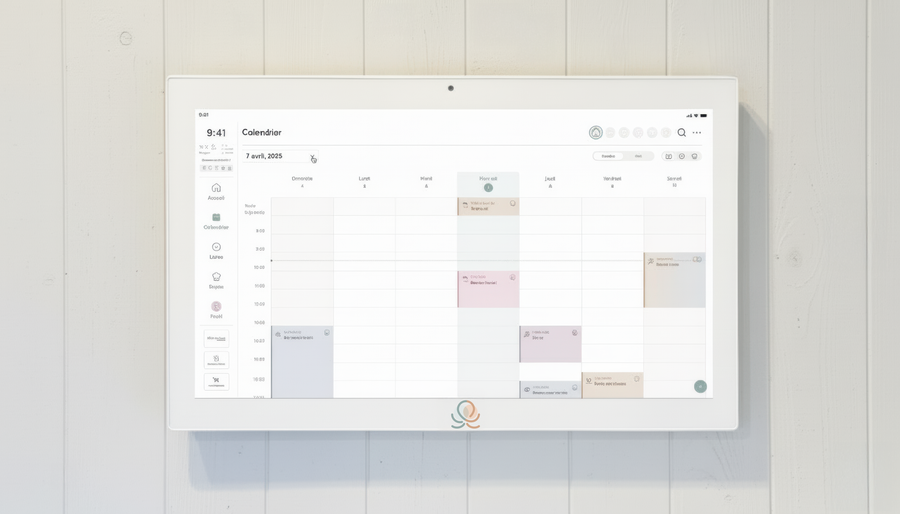
Get the whole family organized with Octave
Meals, chores, the calendar and routines for the whole family in one place: on everyone's phone and on the Station on your wall.
The app is free on iOS and Android.