



Household chores: how much is too much?
13 October, 2025
You're convinced now. Chores are important for your children's development; they build independence, a sense of responsibility and self-esteem. But now you're wondering: how many chores can I give them?
Your 9-year-old has to go to school, do homework, play soccer twice a week and see their friends, and now you'd like them to set the table, clean their room and empty the dishwasher too. Are you raising a capable child... or an exhausted one?
The line between “healthy responsibilities” and “overload” isn't always obvious. Here are a few tips to help you see things more clearly.
Realistic benchmarks by age: your reference guide
There's no universal magic formula, but child development experts generally agree on a daily amount of time that's reasonable to assign to chores depending on a child's age, taking into account their cognitive abilities, their physical stamina and the other demands typical of that age.
Ages 3 to 4: 10 to 15 minutes a day
Suitable chores:
- Putting away their toys
- Putting their dirty clothes in the hamper
- Helping feed a pet with supervision
- Wiping up a small mess with a towel
- Putting the napkins on the table
Ages 5 to 6: 15 to 20 minutes a day
Suitable chores:
- Making their bed
- Setting the table
- Helping prepare simple things (washing vegetables, mixing ingredients)
- Emptying the wastebaskets around the house
Ages 7 to 8: 20 to 30 minutes a day
Suitable chores:
- Making their own simple lunch (sandwich, fruit, snack)
- Tidying their room on their own
- Completely clearing the table after meals
- Folding their clothes
- Sweeping a small area
Ages 9 to 10: 30 to 40 minutes a day
Suitable chores:
- Preparing a complete simple meal (pasta, eggs, a fancier sandwich)
- Washing the dishes or emptying the dishwasher
- Vacuuming
- Doing a load of laundry
- Taking out the garbage and recycling
Ages 11 to 12: 40 to 50 minutes a day
Suitable chores:
- Preparing a full meal for the family
- Handling their own laundry from start to finish (washing, drying, folding, putting away)
- Cleaning the bathroom
- Mowing the lawn or shovelling the driveway
Ages 13 to 15: 45 to 60 minutes a day
Suitable chores:
- Full responsibility for a family meal (planning, shopping, preparing, cleaning up)
- Independently managing all of their personal needs (laundry, tidying, keeping their space clean)
- Major upkeep tasks (cleaning the garage, washing windows, gardening)
- Helping with errands and grocery shopping
Ages 16 to 18: 60 to 90 minutes a day
Suitable chores:
- Nearly complete management of their personal sphere (meals, laundry, living space)
- A major recurring responsibility (handling meals twice a week, fully maintaining one area of the house)
- Tasks that call for judgment and independence (various errands, appointments, managing a personal budget)
Of course, since every child and every situation is different, these times are only a guide and should be adjusted to your needs, your child's needs and your family's schedule.
The warning signs: when it's really too much
The benchmarks above are guidelines, not absolute laws. Here are some concrete signs that it's time to adjust your demands a little.
Sign 1: Chronic irritability and mood swings
What you see: Your normally cheerful child becomes irritable, cries easily or blows up over nothing. Meltdowns are more frequent and they seem constantly on edge.
What it means: Chronic stress raises cortisol, the stress hormone. An overloaded child lives in a constant state of nervous system activation, so their brain never gets a chance to rest and recover.
The important distinction: An occasional bad day is normal. But if the irritability lasts more than two weeks, it may be time to reassess all of their responsibilities – not just chores, but school and their various activities too.
Sign 2: Excessive, disproportionate resistance
What you see: Asking your child to set the table sets off a major meltdown. Every little task is a battle: they argue, negotiate, avoid it or flatly refuse, again and again.
What it means: Some resistance is normal – chores aren't always fun! But disproportionate resistance suggests the child probably feels overwhelmed; their brain then interprets the request as one more thing to deal with rather than as a reasonable contribution.
The nuance: Tell apart resistance caused by overload from resistance caused by not being used to it. If you've just introduced chores, some initial resistance is to be expected. But if the chores have been in place for months and the resistance is getting stronger instead of fading, it's time to take a look at the situation.
Sign 3: Persistent fatigue and sleep problems
What you see: Your child constantly complains of being tired. They have a hard time waking up in the morning and fall asleep in the car, after school or even during homework. Paradoxically, they may also have trouble falling asleep at night because of a mind that never switches off.
What it means: Chronic overload – whether it comes from chores, school, activities or a combination of everything – creates a sleep debt and emotional fatigue. Their body and mind don't have enough time to recover.
The test: A well-balanced child gets enough sleep for their age (9 to 12 hours for ages 6 to 12, 8 to 10 hours for teens) and generally wakes up rested. If that's not the case despite reasonable bedtimes, something probably needs to change!
Sign 4: A drop in school performance
What you see: Grades fall and homework no longer gets finished. The teacher reports a drop in concentration or engagement, and your child forgets their supplies, their projects and their exams.
What it means: When a child is overloaded, something has to give. Often, school performance suffers first, because that's where cognitive fatigue shows up first.
Important: Make sure the cause really is overall overload and not a learning difficulty, a social problem or some other factor.
Sign 5: Social withdrawal and loss of interest
What you see: Your child no longer wants to see their friends and drops their favourite hobbies. They often say they're “too tired” or “not interested” in activities they used to love.
What it means: Social withdrawal is a classic sign of overload and potentially of emerging depression. A child with no energy left for relationships or fun has often gone past their ability to cope.
Sign 6: Unexplained physical symptoms
What you see: Frequent stomachaches, headaches, muscle tension, repeated infections (the immune system is weakened by chronic stress).
What it means: The body shows physically what the mind can't put into words; children often express stress through physical symptoms.
The rule: Always see a doctor to rule out medical causes. But if the tests turn up nothing and the symptoms persist, reassess the responsibilities your child has in their life overall.
The ideal weekly schedule
How do these chores fit into a week's schedule in concrete terms? Here's an example for a 9-year-old who is asked to do about 30 to 35 minutes of chores a day.
Monday (35 minutes)
- Morning: Make their bed, tidy their room (10 min)
- Evening: Set the table, clear it, wipe it down (15 min)
- Evening: Get their bag and clothes ready for the next day (10 min)
Tuesday (30 minutes)
- Morning: Make their bed, feed the pet (10 min)
- Evening: Help get dinner ready (wash the vegetables) (10 min)
- Evening: Tidy the living room (toys, cushions) (10 min)
Wednesday (30 minutes)
- Morning: Usual routine (10 min)
- Evening: Set the table, clear it (15 min)
- Evening: Take out the garbage and recycling (5 min)
Thursday (35 minutes)
- Morning: Usual routine (10 min)
- Evening: Fold their clean clothes and put them away (15 min)
- Evening: Clean the bathroom sink (10 min)
Friday (30 minutes)
- Morning: Usual routine (10 min)
- Evening: Set the table, clear it (15 min)
- Evening: Put away their toys and games (5 min)
Saturday (40 minutes)
- Deeper cleaning of their room (20 min)
- Help with a family project (washing the car, gardening) (20 min)
Sunday (30 minutes)
- Help prepare a family meal (20 min)
- Get ready for the week (check their bag and clothes) (10 min)
Weekly total: about 230 minutes (3 hours 50 minutes)
This pace allows for a meaningful contribution without overload, spread out sensibly to avoid days that are too busy.
The balance equation: all the pieces of the puzzle
Chores aren't an isolated part of your child's life. To judge whether what you're asking of them is “too much,” you need to look at everything they have going on.
The basic formula
Available waking hours = 24 hours - Sleep
For a 9-year-old who needs 10 hours of sleep: 14 waking hours a day
Those 14 hours need to include:
School and transportation (mandatory): 7 to 8 hours
- School day: 6 hours
- Transportation or commute: 30 min to 1 hour
- Morning prep: 30 to 45 min
Homework (mandatory): 30 min to 1 hour
- Varies with age and grade level
Meals and hygiene routines (mandatory): 2 to 2.5 hours
- Three meals: 1 hour to 1 hour 30 minutes
- Hygiene (shower, teeth, etc.): 30 min to 1 hour
After-school activities (variable): 0 to 2 hours
- Sports, music, scouts, etc.
- Some days only
Chores: 20 to 50 min depending on age
Free play and downtime (essential): at least 1 to 2 hours
Family and social time: 1 to 2 hours
Next, add up all of your child's obligations on a typical day. If the total goes over 12 hours (leaving 2 hours for free play and downtime), it's too much.
When to cut back vs. when to stick with it
Not every form of resistance necessarily justifies cutting back on chores.
When to CUT BACK on chores
Situation 1: A period of unusual stress End-of-year exams, a major sports competition, a death in the family, a move, parents separating.
Situation 2: Multiple, persistent signs of overload If your child shows 3 or more warning signs for more than two weeks, reassess all of their obligations.
Situation 3: A health problem (physical or mental) Illness, injury, diagnosed anxiety, depression.
Situation 4: Introducing chores too quickly If you went from zero chores to 45 minutes overnight, resistance is normal. Back off a bit and introduce the new chores gradually over about one to two months instead.
When to STICK WITH IT
Situation 1: Normal initial resistance The first three weeks of a new chore always involve some resistance. That's not overload, it's adjustment.
Situation 2: Strategic protest Your child has discovered that if they complain enough, you give up. This resistance isn't caused by overload but by an attempt to negotiate.
Situation 3: Reasonable expectations for their age If you're asking an 8-year-old for 25 minutes a day (within the benchmarks), their other obligations are normal, and they show no sign of real overload, keep going.
Situation 4: An adjustment period after cutting back on screens If you replace 2 hours of daily screen time with 30 minutes of chores and 1 hour 30 minutes of free play, some initial resistance is to be expected. Stick with it – you're creating a healthier balance.
The Belles Combines solutions
Use our chore chart with a limited number of Magnétos chore magnets for each child. That way, you'll get a quick and easy overview of the workload assigned to your child, and you can adjust your demands accordingly.
Our Octave app calculates the workload you're asking of your child for you, and alerts you if it goes over the recommended benchmarks! No more racking your brain – our virtual family assistant does it for you!
The answer to “how much is too much?” isn't an absolute number. It's a personalized equation that takes into account your child's age, their other obligations, their individual abilities and the signals their body and behaviour are sending you. Your best guide remains careful observation of your child; a well-balanced child sleeps well, keeps up their friendships, does reasonably well at school and still has time for free play and downtime. Chores are important, but they're only one piece of the puzzle; the ultimate goal isn't a perfectly productive child, but a balanced, happy one.
Take action
Take a few minutes to assess the total workload asked of your child, and adjust your demands according to what you find.
Put these tips into practice
Get the whole family organized with Octave
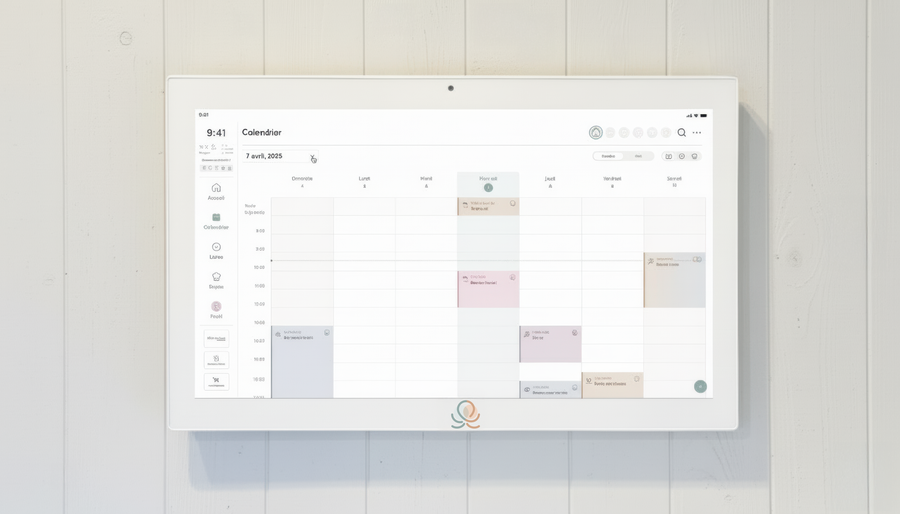
Meals, chores, the calendar and routines for the whole family in one place: on everyone's phone and on the Station on your wall.
The app is free on iOS and Android.