



Difficult behaviours: practical tips and tools to prevent them
24 January, 2020
There's an old saying that goes “Prevention is better than cure!” and, in my opinion, it's especially true in parenting. It's therefore important, with children, to take precautions and put things in place to avoid future difficulties as much as possible. It's indeed easier to stop a difficult behaviour from appearing than to try to make it disappear once it shows up. Creating an organized, structured family life has far more positive effects than you can imagine. Besides calming the parent by reducing their mental load, it prevents difficult behaviours, which in turn fosters a harmonious family life, as well as a positive social and school life for the children.
Why set up a positive reinforcement system? My kids are fine and it doesn't bother me that much if they do little around the house.
Why set up a cool-down corner? My child has a few meltdowns, which is perfectly normal and will pass with time.
Why use a family planner? I have everything I need to note my appointments in my phone and to remind me of everything I have to do.
Why put a routine in place? It's boring and I don't have the energy or the consistency to keep it up.
The answer to all these questions? Structuring your family life allows your child to develop well and ensures that the small difficult behaviours they tend to adopt stay temporary and don't turn into a behaviour disorder.
First, I'd say that every means you put in place to help your child grow well, as well as the time and energy you give them, will help build the bond of attachment between you and them. THE SACROSANCT BOND OF ATTACHMENT! “Through activities, and every time the parent and child do something together, it's in the way the parent cares for their child, and also when the parent teaches their child to make choices and helps them become responsible and more independent, that a good attachment relationship develops,” according to Dr. Chicoine.
So, if you give your child General Store tokens every day and once a week you count the accumulated tokens with them to see the fruit of their efforts, it shows that you take an interest in them, that you have their development at heart and that you care about their education. It's not the only way to get there, but it's an excellent one. It's very reassuring for your child to feel that you're watching over them and their healthy development.
The same thing happens when you use the Cool-Down Kit and create a cool-down corner where your child will feel good. For them, it means that you think it's important to take the time to help them understand and manage their emotions. For English-speaking families, No-Drama Discipline by Daniel J. Siegel and Tina Payne Bryson is a good companion on this topic, as it also explores how to handle difficult behaviour while keeping the connection with your child. As the authors of the French-language book “Comportements difficiles... Que faire?” from Éditions du CHU Sainte-Justine so rightly point out, “creating a secure parent-child attachment helps build good self-esteem: children need to feel loved and accepted. Affectionate gestures, words of encouragement and praise help nurture young people's self-esteem, and they need it. ” The kit helps you do that during one of the most difficult periods for the parent: learning to manage emotions.
Putting routines in place, repetitive ways of doing things, and making them visible with visual cues such as family planners, Magnétos chore magnets and routine bracelets not only helps reassure your child by strengthening the attachment relationship, it also helps maintain living conditions that prevent difficult behaviours. Food routines, physical activity routines, regular sleep hours, healthy-living routines and control over screen time are all protective factors against difficult behaviours.
So, we start early and try to be consistent, because in the long run, it pays off!
Want to be the first to see everything published in the Magazine each month, and get access to our Toolbox, which includes, among other things, free downloads that are as practical as they are fun? Subscribe to Belles Combines Magazine today!
Put these tips into practice
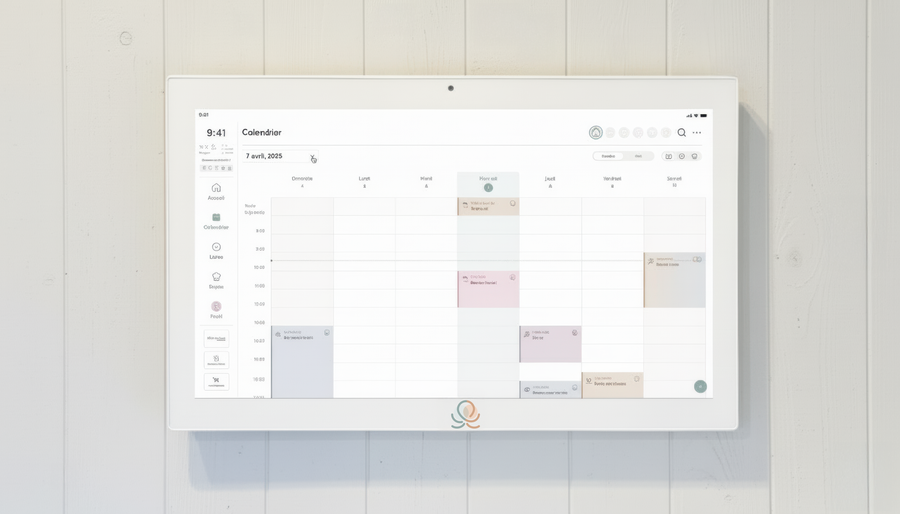
Get the whole family organized with Octave
Meals, chores, the calendar and routines for the whole family in one place: on everyone's phone and on the Station on your wall.
The app is free on iOS and Android.