



Boosting baby's language: simple tricks that make all the difference
11 March, 2026
Even though you're probably eagerly awaiting that first word, language development starts well before baby says it. In fact, from birth, your child is absorbing everything they hear and actively getting ready to communicate with you.
The good news is that you don't need to take a course or buy expensive equipment to boost your little one's language. The best strategies are often the simplest and fit naturally into your probably already very full daily life!
Narrate your day
Even if it can feel strange at first, talking out loud about what you're doing is probably one of the best gifts you can give your child's language development. Describe your actions when you change their diaper, when you dress them, and even when you're making dinner!
This constant narration lets baby hear a ton of new words in context, which makes learning much easier. And contrary to what you might think, talking to a baby who doesn't answer is far from ridiculous – it's actually exactly what their brain needs!
Have a conversation
Even if your six-month-old doesn't answer you with words, they're already communicating! When they coo, make sounds or stare at you intently, that's their own way of taking part in the conversation. So answer as if you understood perfectly what they're saying, even if it sometimes seems a bit disjointed!
These exchanges, even if they seem one-sided, teach your child the basic rules of conversation: taking turns talking, listening to the other person and adjusting their tone and facial expressions, the very foundations of all their future social interactions.
Read
We can't say it often enough: reading books to your baby is magical for their language development, even if your eight-month-old often seems more interested in chewing on the book than listening to the story!
What matters isn't that they sit quietly through the whole story. What matters is that they hear you read, that they connect the pictures with the words and that they develop an interest in books. And if some days the “reading” consists of simply naming the pictures while they frantically turn the pages, that's perfectly fine too!
Sing
Nursery rhymes and songs are extraordinary tools for language development. The rhythm and repetition help baby memorize sounds and words. If you're short on inspiration, there are plenty of wonderful books that bring together the best-known classic nursery rhymes, musical accompaniment included!
Limit background noise
Without always realizing it, everyday life often comes with a lot of ambient noise, whether it's the TV on in the living room, the radio in the kitchen or music that someone forgot to turn off. But to develop their language well, a baby needs to hear words clearly. When you talk to them or play with them, try to create calm moments where they can really focus on the sounds and words you're producing.
Of course, nothing says you have to live in total silence; it's simply a matter of being aware that quiet moments make for better listening and understanding.
Respect their pace
Some children talk very early, and others take their time. As long as your child is progressing and communicating in their own way (through gestures, sounds or looks), they're probably on the right track. Keep talking to them, reading and singing, and their language will develop at its own pace.
Put these tips into practice
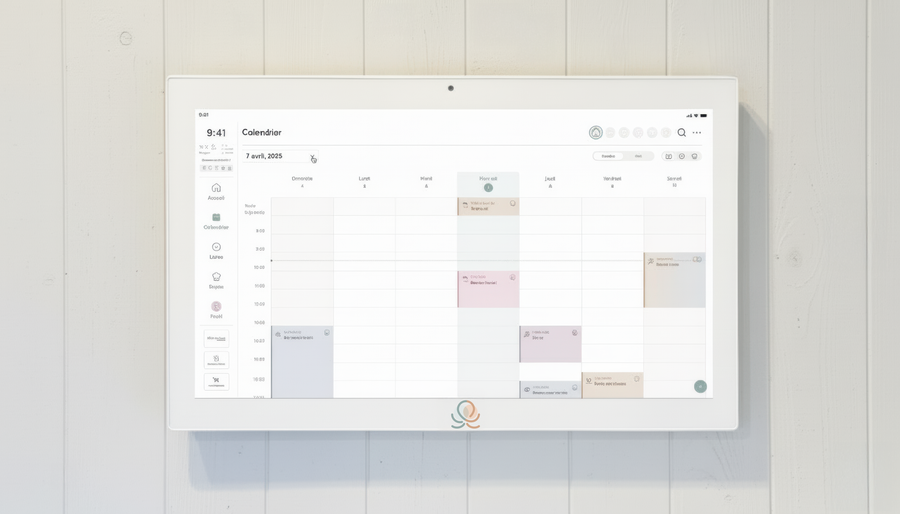
Get the whole family organized with Octave
Meals, chores, the calendar and routines for the whole family in one place: on everyone's phone and on the Station on your wall.
The app is free on iOS and Android.