



Back to school: setting clear and positive expectations
22 August, 2026
Back to school is one of those pivotal moments where excitement and apprehension mix, for kids and parents alike. A new teacher, a new routine, sometimes a new school; all of it takes time to adjust to. And while this adjustment generally goes better than we imagine, it's made much easier when clear expectations are set from the start, rather than discovered through frustrations along the way.
Why expectations make all the difference
A child who knows what to expect feels safer. It isn't a matter of rigidity or control, but of predictability: when you know the framework, you can move within it with confidence, and the energy that would otherwise be spent guessing the rules can go toward adapting, learning and making friends.
Clear expectations aren't synonymous with strictness either. They can (and should!) be worded positively, focusing on what we want to see rather than on what we want to avoid.
The expectations to set before the big day
A few days before school starts, take time to clearly name expectations in the different areas of school life:
- The morning and evening routine: what time we get up, what has to be done before leaving, what time we go to bed on school nights
- Homework and schoolwork: when it gets done, where, and with how much independence depending on the child's age
- Behaviour in class: listening, raising your hand, respecting others, asking for help when needed
- Screen management: the times that are allowed and those reserved for work or sleep
- Extracurricular activities: how they fit with the new schedule
The important thing isn't to dictate everything, but to discuss together what's realistic and what really matters to your family.
How to word positive expectations
How an expectation is communicated directly influences how it's received. Here are a few useful principles:
- Focus on the how rather than the don't. Replacing “don't forget your bag again” with “we'll pack the bag together the night before” completely changes the dynamic.
- Involve the child in the process. A child who helps define their morning routine, for example, is much more likely to follow it than a routine that's simply imposed on them.
- Be specific rather than vague. “Be more serious at school” gives no concrete direction. “We put our things away before leaving the classroom” offers a clear, observable action.
- Adapt expectations to the child's age and temperament. What's realistic for a 10-year-old isn't necessarily realistic for a 6-year-old, and what works for a rather reserved child may need adjustments for a more impulsive one.
- Celebrate effort, not just results. Pointing out that a child tried, persevered or asked for help reinforces far more lasting behaviours than a grade or an isolated result.
Talk about it before it becomes a problem
One of the most common traps is waiting for a behaviour to become a problem before clarifying what we expect. It's better to take the lead: discuss expectations as a family before school starts, rather than discovering them in reaction to a difficulty.
These conversations can happen naturally, while walking to school, during dinner or at a quiet moment at the end of the day. The goal isn't to have one big perfect discussion, but rather several short, recurring exchanges that let you adjust course as needed.
Remember that expectations evolve
The expectations set in September aren't carved in stone. As the child grows, the year goes on and new challenges appear, it's perfectly normal (and even desirable) to revisit what was agreed. An expectation that's clear today may need adjusting in a few months, and that's precisely what makes it a living tool rather than a fixed rule.
A successful back-to-school doesn't rest on perfection, but on clear foundations, communicated kindly and adjusted as needed. With a positive framework in place, kids and parents alike can approach the coming year with a little more confidence and a little less uncertainty. 🍎📚
Put these tips into practice
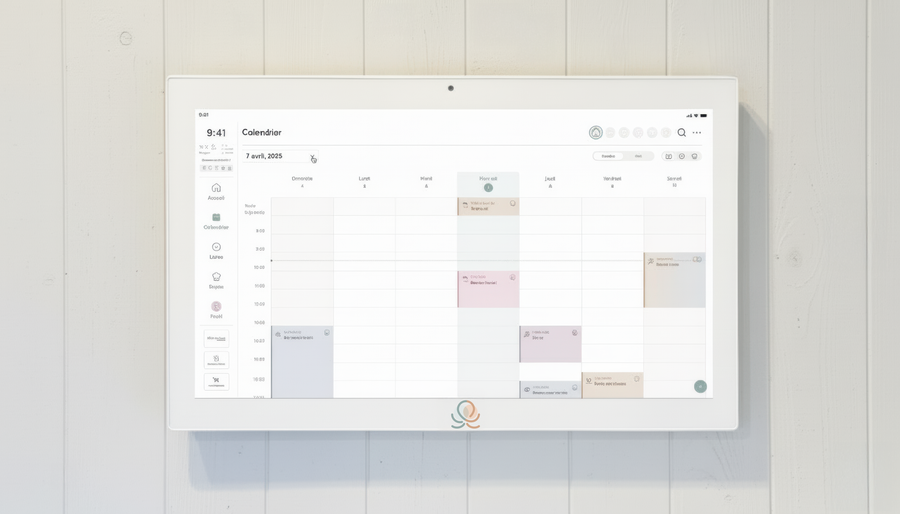
Get the whole family organized with Octave
Meals, chores, the calendar and routines for the whole family in one place: on everyone's phone and on the Station on your wall.
The app is free on iOS and Android.