



At what age can a child truly be independent?
14 October, 2025
“He's 8 years old, he should be able to get dressed by himself without me reminding him ten times!”
“She knows how to clean her room, she's done it a thousand times. Why doesn't she ever do it on her own?”
“My 10-year-old son forgets his lunch on the counter every single time. It's not complicated, though!”
If these sentences sound familiar, take comfort: you're not alone! Children's independence is certainly one of the most common sources of frustration for parents. We know our kids are capable of doing something, and yet they don't do it. We often read this behaviour as laziness, a lack of motivation or even defiance, when the truth is usually something else entirely: being able to do something does not automatically mean being able to do it independently!
Cognitive ability vs. executive ability
To understand why your child knows how to do something but still doesn't do it, you first need to understand how their brain works. Two different systems are at work, and they don't develop at the same pace.
Cognitive ability: knowing WHAT to do
Cognitive ability is knowledge in its simplest form: understanding information, memorizing steps, knowing what is expected of you.
Examples of cognitive abilities:
- Knowing the steps for brushing teeth
- Understanding that you have to put your coat on before going outside in winter
- Knowing that the school bag should be packed the night before
- Remembering the morning routine
So a 5-year-old can probably recite their morning routine perfectly: “I get up, I eat breakfast, I get dressed, I brush my teeth, I put on my shoes.” They know their routine; their memory works and their understanding is right there!
Executive ability: being able to DO it independently
Executive ability is a completely different brain function. It covers the skills that make it possible to:
- Initiate an action without an outside reminder
- Plan the steps in the right order
- Inhibit distractions and stay focused
- Manage their time and estimate how long things take
- Adjust their behaviour when something isn't working
- Persevere even when it's hard or boring
These executive functions are handled by the prefrontal cortex, the part of the brain located just behind the forehead, which doesn't finish developing until around age 25.
The normal gap of 2 to 4 years
To help you set realistic expectations for your children, here is something worth knowing: a child's executive ability generally lags 2 to 4 years behind their cognitive ability.
What does that mean in concrete terms?
- Your 6-year-old may understand things like a 6-year-old, but have the executive functions of a 3- or 4-year-old.
- Your 12-year-old understands like a kid their age, but starts and plans tasks like an 8- to 10-year-old.
- Your 15-year-old reasons like a young adult, but organizes their time like an 11- to 13-year-old.
This gap is normal. It's not a deficit and it's not laziness. It's science!
What this means for building independence
When we ask a child to be “independent,” we are really asking them to use their executive functions. Not just to know what to do, but to:
- Remember to do it without being told
- Start at the right time
- Follow all the steps in order
- Not get distracted along the way
- Finish the task completely
- Do it again the next day without supervision
All of these demands add up to a huge job for a brain that is still maturing. So the solution is to stop asking yourself “Do they know how to do it?” and ask instead “Is their brain able to handle this task on its own?”
Developmental chart: cognitive vs. executive
Here is a realistic overview of the gap by age:
Ages 5 to 6
- Cognitive ability: Understands multi-step instructions, memorizes simple routines
- Executive ability: Needs constant reminders, is easily distracted, has trouble getting started alone
Ages 7 to 8
- Cognitive ability: Can explain clearly what they need to do and why
- Executive ability: Starts to initiate some tasks, but supervision is still needed for most of them
Ages 9 to 10
- Cognitive ability: Well-developed logical reasoning, understands consequences
- Executive ability: Emerging independence with well-established routines, but time management is still weak
Ages 11 to 12
- Cognitive ability: Abstract thinking is developing, can anticipate and plan mentally
- Executive ability: Can handle several simple tasks, but needs external structure for complex projects
Ages 13 to 15
- Cognitive ability: Adult-level reasoning for most concepts
- Executive ability: Planning and organization are still immature, frequent impulsivity
Understanding this gap helps you adjust your expectations and give the right level of support, without overprotecting or abandoning them.
The 5 steps toward independence
Independence isn't a switch you flip one fine morning. It's more like a ladder that your child climbs gradually, with your support lessening a little at each rung.
Here are the five steps every new skill should go through before it can truly be done independently.
Step 1: You do it, they watch – Modelling
How: You do the whole task while your child watches and you say out loud what you're doing.
Example – packing a lunch:
“Look, I'm packing your lunch for tomorrow. First, I get the clean lunch box. Then I put in a sandwich – I cut it in half because it's easier to eat. Next I add veggies, fruit and a treat. Now I check that there's a clean water bottle. There, it's ready! I'm putting the box in the fridge so it stays cold.”
Why it matters: You're creating a “mental map” in your child's brain. They see not only what you do, but how and in what order. Watching it over and over builds the cognitive foundations they need.
Sign that they're ready for the next step: Your child starts to say out loud what you're going to do next. “Now you're going to put in the fruit, right?”
Step 2: You do it together, they take part – Guided practice
How: You do the task together, giving your child simple micro-responsibilities while you manage the overall sequence.
Example – morning routine:
You: “It's time to get dressed. Go get a shirt from your drawer.”
(Your child goes to get the shirt.)
You: “Perfect! Now put it on. Is it on the right way or inside out? Inside out! Turn it around. Great! Now your pants. Which ones do you want to wear?”
You're the conductor: they play the individual notes, but you lead the symphony.
Why it matters: Your child builds the physical skill and their confidence without having to manage the planning and the sequence. Their brain can focus on doing, not on organizing.
Sign that they're ready for the next step: They start doing some steps without waiting for your instructions. They anticipate what comes next.
Step 3: They do it, you supervise and remind – Supervised independence
How: Your child does the task, but you stay nearby to remind them of the steps, redirect them when they get distracted and check that the task is done properly.
Example – brushing teeth:
You: “It's time to brush your teeth.”
(Your child goes into the bathroom.)
You (from the hallway): “Don't forget the toothpaste... Brush the back teeth too... Keep going, it hasn't been two minutes yet... Okay, now rinse your mouth and your toothbrush.”
They do the physical work, while you supply the executive reminders that their brain can't yet handle on its own.
Why it matters: This step builds procedural memory, the ability to do something automatically. But the brain still needs outside checks to make sure every step has been completed.
Key tool at this stage: The Petites Séquences stickers let your child see what they need to do without you having to repeat it out loud.
Sign that they're ready for the next step: You notice that they complete the task fully several days in a row without you having to step in (even if you're there).
Step 4: They do it alone, you check afterward – Partial independence
How: Your child does the whole task on their own, but you then check that it was done correctly and completely.
Example – packing their school bag:
You: “It's time to pack your bag for tomorrow.”
(30 minutes later)
You: “All done? Great. Show me what you put in. Okay, you have your notebooks and your lunch. Is anything missing? Your water bottle is missing. Go get it.”
Why it matters: Your child develops their judgment and their ability to check their own work. But since their brain still needs an external safety net, your checks teach them how to check for themselves that the task was done properly.
Sign that they're ready for the next step: When you check, everything is consistently correct for several weeks in a row. Your interventions become unnecessary.
Step 5: They do it alone, they check it alone – Full independence
How: Your child starts the task, does it completely, checks it themselves and deals with any problems that come up. Your role? Watch from a distance and step in only if something unusual happens.
Example – the whole morning routine:
Your 11-year-old gets up with their alarm, follows their morning routine (getting dressed, eating breakfast, brushing their teeth, packing their bag) and is ready to leave on time. You didn't say a word and didn't check a thing. They handled it all on their own.
Important reality: Even at this step, independence can fluctuate. A child who is sick, stressed or tired can temporarily slide back down one or two steps. It's not a permanent regression – it's normal!
The traps: forcing independence too early vs. overprotecting
Finding the right balance between support and independence is certainly one of the trickiest challenges of parenting. Here are the two possible traps and some tips for avoiding them.
Trap 1: Forcing independence too early
What it looks like:
“You're 7, you're old enough to make your own bed. Figure it out!”
“It's YOUR school bag. If you forget your things, you'll deal with the consequences at school. Not my problem.”
“I'm not going to remind you to do your homework. You're responsible for it now.”
In theory, this approach seems to promote independence and responsibility. In practice, it asks an immature brain to do something it isn't yet able to do.
What really happens:
The child fails over and over: they don't finish their homework, they forget their lunch, their bed is never made, they're often late, and so on.
Natural consequences pile up: bad grades, hunger, complaints from teachers, social isolation.
The child doesn't develop independence. They develop anxiety, and often the belief that they're “useless” and incapable.
Why it doesn't work:
You can't force a brain to mature faster by taking away the support it needs. Executive functions are built with gradual support, not with no support at all.
How to get out of this trap:
Go back two steps on the independence ladder. If you were expecting step 5 (full independence), go back to step 3 (supervised independence). Offer support without judgment, and remember: you're putting up temporary scaffolding, not creating a permanent dependence.
Trap 2: Overprotecting
What it looks like:
“Never mind, I'll do it. It's faster.”
“You'll probably forget, so I'll remind you myself.”
“I check their bag every night because otherwise they forget important things.”
This approach often comes from good intentions: you want to keep your child from suffering, failing or being embarrassed.
What really happens:
The child never learns to do things on their own. Why would they? You do it for them! Their brain has no reason to develop these executive skills – you are their external prefrontal cortex.
Long-term consequences:
- Difficulty managing university or a first job (nobody is there to manage things for them)
- Anxiety about responsibilities
- Anger or resentment toward parents (“You never taught me!”)
- Lack of confidence in their own abilities
How to get out of this trap:
Even if it's hard, you have to let go. Do it gradually.
Choose a task your child could reasonably do at their age (see the steps above). Announce the change: “From now on, you're going to do this task yourself. I'll help you at first, but then you'll do it on your own.”
Follow steps 1 to 5 of the progression ladder, and resist the urge to take control back when the task is done slowly or imperfectly.
Remember: your goal is not a perfect result today. Your goal is to build the executive skills your child will need for the rest of their life.
Signs BY AGE: what to expect when
At ages 5 to 6:
- Can follow a 3- or 4-step routine with visual support
- Completes basic hygiene tasks with supervision
- Starts putting away their toys when asked (not spontaneously)
At ages 7 to 8:
- Can get completely dressed on their own if the clothes are set out
- Remembers some routine steps without a reminder
- Can do a simple task from start to finish
At ages 9 to 10:
- Starts some routines without being told
- Can handle 2 or 3 daily responsibilities on their own
- Begins to estimate the time needed to complete tasks
At ages 11 to 12:
- Manages their morning or evening routine completely
- Can plan in the short term (packing their bag, handling simple homework)
- Thinks about future consequences (“If I don't do this now, I'll be late tomorrow”)
At ages 13 to 15:
- Can handle several responsibilities at once
- Plans over several days (school projects, activities)
- Corrects their own mistakes without parental intervention
For an even more complete and detailed summary of the chores a child can generally handle at each age, check out our independence pathway, available in our Magazine and in the Octave app!
In a nutshell: independence is a marathon, not a sprint
Your 7-year-old won't be as independent as often as you'd like, your 12-year-old will still forget things, and your 15-year-old will still need your support from time to time.
And that's NORMAL!
Your job is not to force an immature brain to act like an adult brain. Your job is to provide the external scaffolding that this brain needs while it builds its own internal structures.
Be patient. Be consistent. Celebrate the small victories. And remember: every time you resist the urge to do everything for them, you're investing in a future adult who will know how to manage on their own. Independence can't be handed over. It's built, step by step, year after year, with your caring support as the foundation.
Time to take action
It's time to put all of this advice into action! Using the signs by age and our independence pathway (available in our Magazine and in the Octave app), take the time to assess where your child is now, and what the next steps are that will help them develop even more independence.
Want some practical help? Install our Octave app, which will quickly and effortlessly give you routines tailored to your child's real level of independence!
Put these tips into practice
Get the whole family organized with Octave
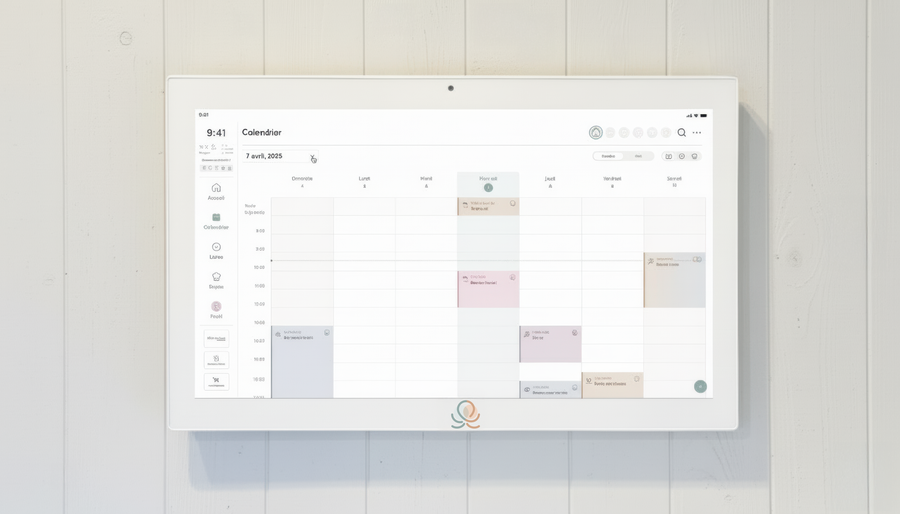
Meals, chores, the calendar and routines for the whole family in one place: on everyone's phone and on the Station on your wall.
The app is free on iOS and Android.