


Allowance: an age-by-age guide and management system
10 June, 2025
Financial literacy is an essential pillar in developing independence in our children. Yet it's a topic we often bring up late, sometimes even in adolescence, when the foundations can be laid from a very young age. How do you introduce allowance? How much should you give? From what age? Here's a practical guide to support you in this important educational journey.
Think before you act
Should allowance be given in exchange for chores?
Everyone has their own philosophy on this. At Les Belles Combines, we favour an approach where allowance is given unconditionally. Why? So that children can learn to manage their money through experience: sometimes making mistakes, making disappointing purchases and learning valuable lessons from them.
If allowance is given only in exchange for completed chores, some children risk receiving very little, or even none at all, simply because they don't take enough part in the family chores. That would deprive them of essential opportunities to learn about money.
We believe children shouldn't be “paid” for their household chores. The fundamental message we want to send is that everyone contributes at home to make family life pleasant. The General Store rewards for good behaviour or acts of independence, just like the regular allowance, fit into that same philosophy: encouraging a positive, harmonious family dynamic.
That said, it can make sense to offer a bonus to recognize an exceptional contribution. A child who shows initiative, who does all their tasks in Octave without needing to be reminded, or who takes particular care with their work could receive a small bonus. This approach is similar to that of an employer who rewards the quality of the work and the commitment, beyond simply getting the expected tasks done.
Ages 4 to 6: An exploration phase with the General Store
At this age, children are too young to handle real money on their own, but they're perfectly capable of understanding the concepts of exchange and value.
The General Store as a learning tool
The General Store is an educational product created by Les Belles Combines, specially designed to introduce children to financial concepts. Much more than a simple motivation system, it's a real teaching tool that lets children:
-
Understand the value of things
-
Grasp the principle of exchange (tokens for privileges or small items)
-
Learn to wait to get something more important
-
Discover the satisfaction of “earning” their own resources
Everything is included in the box:
-
A complete board where the child can track their progress and earn tokens
-
A savings booklet to “deposit” unspent tokens
-
A little debit card for playing store like the grown-ups
-
Plenty of stickers to set prices for items, create sales and make the experience fun and educational
-
A detailed instruction guide for parents
By holding regular store-opening sessions, you give your child the chance to learn the value of saving up for more expensive items or privileges. It's a first valuable lesson in delayed gratification, an essential skill for managing money well in the future.
Ages 7 to 10: My first wallet
This is the ideal age to introduce real money and let children have their first hands-on experiences with managing finances.
First experiences handling real money
At this stage, you can let children explore and manage:
-
Small amounts received as gifts from grandparents
-
Coins found or given from time to time
-
Small, specific budgets for particular occasions
Special occasions to practise:
-
A trip to the movies with a budget for treats
-
A small amount to spend at a fair
-
A budget to buy a birthday gift for a friend
-
A special day when the child manages buying their own snack
Opening a first account
This is also the ideal time to open a bank account for a child:
-
Go with your child to open the account
-
Plan regular deposits (even small ones) to show how savings add up
-
Regularly show them the statement or the app to visualize their savings
-
Explain the ideas of interest and long-term saving in simple terms
At this age, it's still early to set a regular allowance, but these one-off experiences lay the foundation for a healthy relationship with money.
Ages 11 to 12: First regular allowances
This is generally the age when you can start setting up a fixed monthly allowance, meant to cover small personal expenses.
Setting up the allowance
-
Decide on a monthly amount that fits your family budget and your child's needs
-
Spell out clearly what the allowance is supposed to cover (entertainment, little treats, small gifts for friends)
-
Set a regular payment date (for example, the 1st of the month)
Important lessons to pass on:
-
If the money is spent in the first week, there won't be an advance on the following month's
-
Encourage your child to plan their spending over the whole month
-
Regularly discuss purchase choices and possible alternatives
-
Introduce the idea of giving or sharing (maybe 10% of the allowance for a cause close to their heart)
This is the age when financial planning skills truly develop. Mistakes are normal and part of the learning process – better that they happen now, with small amounts!
Ages 12 to 14: The first debit card
An important step in financial independence: the first bank card, which marks the start of managing money electronically.
An introduction to digital banking
-
Transfer the monthly allowance directly to the teen's account
-
Set daily spending limits with the bank
-
Show them how to check their balance online or through an app
-
Explain bank fees and how to avoid them
Growing responsibilities
-
Encourage small jobs for the family or the neighbourhood
-
Show them how to receive and check the transfers for these jobs
-
Gradually increase the allowance based on the financial maturity they show
-
Introduce the idea of a budget on paper or in a simple app
This is also the time to talk about financial safety: protecting the PIN, taking precautions with online purchases, recognizing potential scams.
Ages 15 to 20: Learning to manage a full budget
As they approach adulthood, young people need to gradually take on responsibility for larger budgets and develop almost complete financial independence.
How allowances evolve
-
Gradually increase the amount of the allowance
-
Hand over responsibility for certain specific budget items:
-
Seasonal clothing budget
-
School supplies budget
-
Sports activities and equipment budget
-
Outings and entertainment budget
-
Cell phone budget
Preparing for financial independence
-
Introduce them to more advanced budget-tracking tools
-
Discuss long-term saving choices (school, a first place of their own)
-
Cover the concepts of credit, debt and their consequences
-
Encourage part-time jobs to supplement the allowance
-
Involve them in certain family financial decisions to lead by example
By the end of this period, your young adult should have all the skills needed to manage their own budget independently and responsibly.
To make this financial education easier, Les Belles Combines has created two practical tools you can download right now. My First Budget guides your child through their first steps toward independent money management, with a simple format suited to their age. For parents, our Budget Delegation Planner helps you determine exactly which budget items to hand over to each child, depending on their age and maturity. These two complementary printables will let you put the principles covered in this article into practice.
General tips for all ages
Consistency and transparency
-
Keep your commitments about allowance (amount and regularity)
-
Explain your expectations and the related responsibilities clearly
-
Avoid using money as a punishment or a reward for unrelated behaviours
Open communication
-
Create a judgment-free space to talk about money
-
Share your own lessons learned, and sometimes your mistakes
-
Answer questions honestly, even when they're about the family's finances
-
Use everyday situations to talk about financial concepts
A balance between freedom and guidance
-
Allow the freedom to make mistakes with reasonable amounts
-
Guide without imposing your own spending values
-
Recognize that every child has their own relationship with money (spender, saver, etc.)
-
Adapt your approach to each child's personality
By following these progressive steps, you'll give your children not only practical money-management skills, but also the confidence they need to make informed decisions throughout their lives. Money is a tool and, like any tool, it takes learning to use it properly. Starting early, in a way that suits their age, is the key to a healthy, balanced relationship with personal finances.
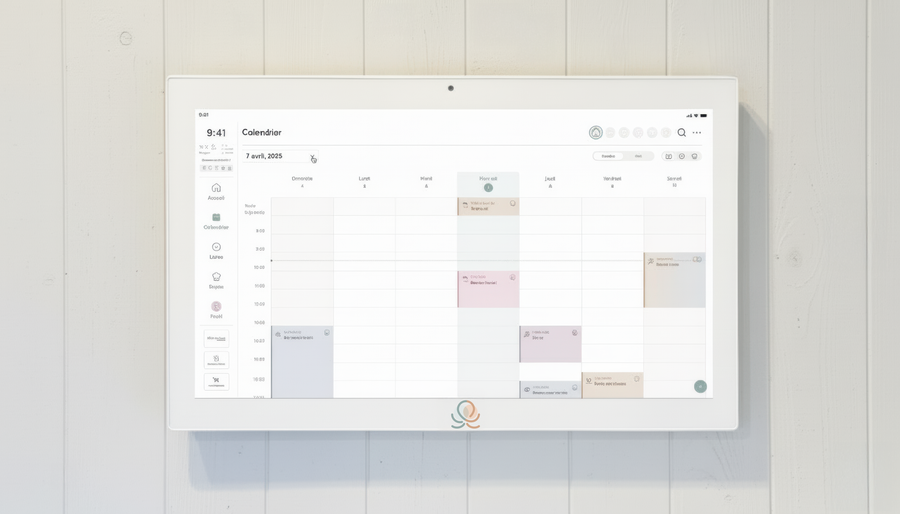
🚀 Find this article and much more in the Octave app: shared calendar, collaborative task list, meal planner, centralized family info and independence tracking – your number one ally for an organized family life! 📱✨
Put these tips into practice
Get the whole family organized with Octave
Meals, chores, the calendar and routines for the whole family in one place: on everyone's phone and on the Station on your wall.
The app is free on iOS and Android.