



A framework for our kids: tips for defining it well
18 September, 2018
Providing structure for children
Whether we're parents or teachers, we've all heard time and time again about providing structure for children. It can sometimes seem boring and negative, and maybe that's why some people neglect it. And yet! The framework is the foundation for building the bond we have with children. It also increases their chances of success and their sense of security. That's no small thing, is it?
The adult as a stake
To truly understand and illustrate the role of the parent or teacher with children, I thought I'd show it with a particular image. Picture a stake, the very kind we use to help our plants and trees grow well and to support them. Now imagine yourself in the role of that stake and your child in the role of the tree. The spot chosen to plant the stake is very important. It must be placed neither too close to the tree nor too far. It must be placed perfectly so as not to hinder its growth, while giving it support to grow straight and not collapse in bad weather.
The adult's role with the child is very similar to that of the stake. Placed too close to their child, the parent risks smothering them, keeping them from blossoming, from trying new things and from building their confidence. Placed too far away, the child risks developing insecurity, because even though they enjoy more freedom, they don't know how far they can go since the limits that have been set are blurry and unclear. In that case, the adult sometimes tries to become the child's friend or doesn't want to displease or frustrate them, and so makes many compromises. This often leads to chaos and disoriented children. When the parent is instead placed just close enough, the child will feel guided and safe, and that's how they'll develop and explore in a healthy way. They feel watched over, but with a certain flexibility. The adult ensures coherence and consistency in the relationship. Yes, the child sometimes experiences frustration, but it's reassuring, because a “no” sets a limit. Saying “no” to a child doesn't mean we don't love them, quite the opposite. Besides, although this stake is smaller in early childhood, it will grow tall as the child gets older and will serve as support and presence as the child enters adolescence and adult life.
Framing our artwork and... our children!
Another image that speaks to me, and that I once heard from a colleague, is the frame itself. At home, we choose pretty photos and beautiful pictures and we frame them to show them off. Let's imagine the same thing with our child. They're precious and beautiful to us and they too deserve to be framed. Without a frame, they're lost and at risk of being disoriented.
How do I set up my framework well?
When the framework is well defined in a family (or in a classroom), the adult-child relationship is less difficult, healthier and easier, because the child knows what's expected of them. It lets them relate better to others and behave better with their peers. Self-esteem and a sense of security are also fostered. The framework makes it possible to build a more stable bond and brings gentleness into the home, because children know what to expect and are less likely to constantly push (and test!) the adult's limits. To set up a framework well, here are the 5 “C”s to follow:- Clear rules; make sure the words you use are well understood by the child.
- Consistent rules; stay firm and always apply a rule the same way, despite emotions and fatigue (let's cheer each other on, because it's not always easy!).
- Concrete rules; state the behaviour you want.
- Coherent rules; go in the same direction as what you ask of your child. Be a role model in your attitudes and your words. Let's take a good look at ourselves!
- Rules with consequences; apply consequences (positive or negative) connected to the child's behaviour. It's good for the child to know the consequences in advance.
Fads and trends come and go in education, but I believe these rules are timeless and stand the test of time. They'll be just as relevant in 50 years.
Getting the disorganized little ones organized
It's hard for the youngest children to find their bearings in time and to concretely understand what 10 minutes represents, for example. What's the point of repeating that there are so many minutes left to finish a meal, at bath time or before bedtime if your child has no idea what a minute really represents? That's where visual cues take on their full importance, with the use, for example, of a Time Timer that will clearly show the child time passing.
I expect...
Life goes fast, fast, fast! Our schedules are packed and our heads are often full of a thousand and one things. It's often when facing an unpleasant or irritating situation that we realize we haven't taken the time to set our guideposts and to establish our expectations clearly. So it's important to take the time to repeat, show and model our expectations if necessary. And then, of course, to follow through on them. That way, if your child shows inappropriate behaviour and a consequence is applied, there's a good chance it won't happen again next time, because children usually have a good memory. Imagine the opposite scenario. The parent states their expectations clearly and the child doesn't respect them. The parent threatens them several times with a consequence but doesn't apply it. In the end, nothing happens. What message does the child receive? That no matter what they do or what behaviour they adopt, it's not that serious, because there won't be a consequence in the end. On this too, children have long memories!
Want to set up a better-defined framework? Try it and you'll quickly realize how beneficial it is for everyone. It fosters thriving children and healthy relationships while strengthening the bond of attachment. And that precious bond is not to be neglected when you know it lets a child feel loved, safe and worthy of affection, and that it will give them a positive perception of others and let them live lots of new experiences.
Looking for a concrete tool to help you stick to the framework you've set? Check out our behaviour scale!
Want to be the first to see everything published in the Magazine each month, and get access to our Toolbox, which includes, among other things, free downloads that are as practical as they are fun? Subscribe to Belles Combines Magazine today!
Put these tips into practice
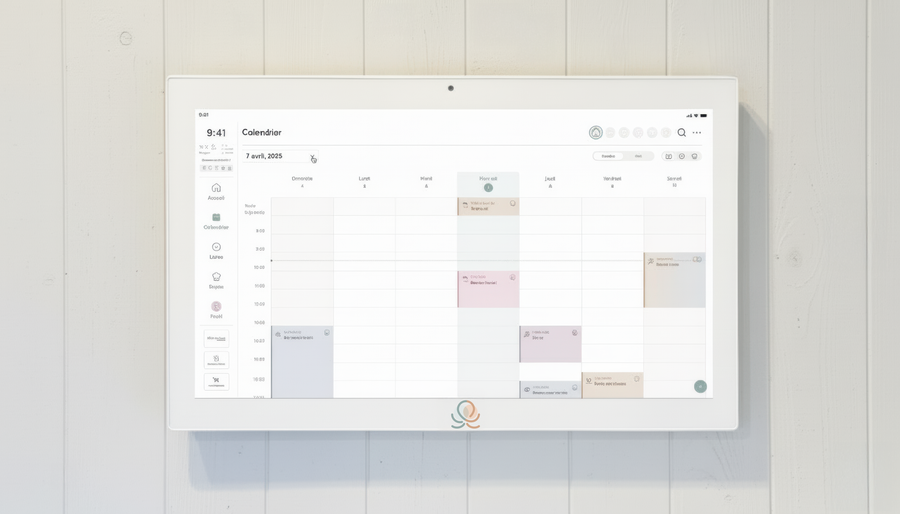
Get the whole family organized with Octave
Meals, chores, the calendar and routines for the whole family in one place: on everyone's phone and on the Station on your wall.
The app is free on iOS and Android.