


10 principles for becoming a discipline pro
06 September, 2018
Getting our kids to “obey” is the story of our lives as parents! Sometimes fatigue, impatience, discouragement and irritability take over and the task becomes very heavy. Besides, parenting and its principles seem to change every 10 to 15 years, like fashion! In the past, discipline was more focused on obedience itself, whereas today, we'd like kids to develop their reasoning and learn, rather than simply obey out of fear of being punished. But getting kids to listen without yelling isn't so simple, especially since, let's be honest, we all reach our limit at times! So here are a few basic principles that could make life easier for you: try them at home tonight!
Use positive reinforcement
Praising children for good behaviour is extremely effective. Today's kids seem to be immune to consequences, as if they'd been vaccinated against feeling their effect! That said, praise and rewards in all their forms (kind words, privileges, small items, etc.) have much more impact on their behaviour. So put the focus on what you want them to do rather than on what you want to avoid, reward the good deeds (check out the General Store, our turnkey motivation and positive reinforcement system!) and, when possible, ignore the not-so-good ones.
Swap the no for a yes
It's crazy how many “no”s you end up saying when you become a parent. Inevitably, it ends up irritating our kids. That's why I particularly like the idea that behind every “no” hides a “yes.” For example, when your child asks if you can play Lego with them, rather than saying “No, I don't have time!” say, “Yes, as soon as we've finished dinner and tidied the kitchen!” Or when your child asks for a toy at the store, rather than saying “No, we don't need that toy, we have enough!” say, “Yes, that's a cool toy, we'll put it on the list of things you'd like to get for your birthday!”
Use humour
What a powerful ally for parents! Develop your sense of humour and you'll quickly get your kids' cooperation. For example, give your child three choices, two realistic and one silly: “Louis, either you put your toys away now with my help, or you put them away later all by yourself, or I call the great Goulou-goulou, the toy-gobbler, who will come and eat them all up. He's always hungry for a puzzle or a box of Playmobil, that one!” Personifying objects is also a really good way to get the cooperation of the littlest ones. Why not put on a dying voice and get into the skin of a wilting plant begging for water? “Help me, I'm dying, I'm shriveling up, could somebody kind please give me some water, I beg you!” Don't hesitate, either, to chase your youngest around the house while making the toothbrush and the toothpaste tube talk: “Oh my, you little rascal, your mouth smells awful, come here so I can clean those dirty little teeth!”
*I have to say I really censored myself in this part to please everyone! But please, let loose and make your little brood laugh!
Lighten your schedule and declutter the house
That seems like strange advice, but believe me, it's real advice. Fewer toys in the house also means fewer distractions. Your children's attention is limited, and cutting back on the number of activities will let them be more zen and better able to listen. The same reasoning applies to extracurricular activities and screen time.
To declutter the house effectively, check out our downloadable One Room a Month Challenges right here!
Practise prevention
Prevention is surely the best solution to all discipline problems! Remember this: every problem you can prevent is a problem you won't have to solve. Before heading out with your kids, take a few minutes to talk and clearly lay out your expectations. The three minutes spent in the car before going into the grocery store will pay off. Remind them of the rules (walk, speak quietly, we only buy what's on the list, and the cart is not a play structure to climb on) and decide right away who will push the grocery cart while you're at it. Still in the spirit of prevention, take care to remember the problem situations, the ones that make your child lose control. For example, if they hate losing at a game, before starting a game, ask if they'll be able to be happy for the winner, and tell them you'll be very proud of them if they manage it. Same thing if your child tends to have a meltdown when you leave a place. Take a few minutes to warn them that you'll soon be leaving and that you expect them to be able to handle their disappointment.
Don't offer an alternative when you set your limits
We all tend to threaten our kids when they behave unacceptably. For example, I've often said to my kids, “If you talk to your brother like that, you'll go to your room!” By offering this kind of choice to our kids, what we're actually telling them is, “If you don't mind going to your room, you can talk to your brother any way you like!” Our child (no dumber than anyone else) will then weigh their options and ask themselves, “Is it worth spending 30 minutes in my room to be able to talk to my brother this way?”
Take action
Decide on privilege losses for bad behaviour and, above all, take action as soon as the limit has been crossed. Favour logical consequences when possible. For example, if one of your children is deliberately trying to upset their little sister, send them to their room, telling them that since their behaviour is ruining the mood in the house and everybody is suffering, it will be better that way, or tell them their behaviour makes you suspect they're tired, so it would be better for them to go to bed earlier tonight.
Read our blog post on applying logical consequences!
Never mind the rest, we can't control everything
Overheard at the library recently: “Don't play with the rug like that, don't put your hands in your mouth, don't sit on the floor, it's dirty, don't pull on your sister's sweater, stop stomping your foot like that, don't hold the book by the cover, you'll break it, watch out for people, don't talk so loudly.” It's hard for a child to follow 20 instructions in the same minute and, above all, to figure out which ones really matter. Better to have two instructions followed well than 20 that haven't sunk in. Choose what's most important, let the rest go, you'll come back to it later. Also, before getting to the library, say: “We're going to the library, it's important not to talk loudly and to take good care of the books. It's a quiet place and we have to be respectful. Can I count on you?”
Make the next step appealing
For some time now, my three-year-old daughter has been refusing to do what we ask and firmly resisting it. Recently, she dug in her heels about putting her shoes away when coming into the house, claiming she wasn't able to. Not wanting to give in, I immediately pulled out the “I'm counting to three and, if you don't do it, you'll have to spend five minutes in your room.” An incredible meltdown followed. The next time, I did things differently. I said to her instead, “Come on, Marie, you put your shoes away and then we'll make a snack together.” Magic! She did it and ran to the kitchen. It's not always easy, but with a little imagination, you'll get there.
There's no good discipline without commitment
Yes, indeed, disciplining your children takes time, patience, coherence and, above all, consistency. To help your children become independent, you'll need to put in the energy and all your creativity. Fights between kids always break out when we're in the middle of a captivating book or an interesting TV show, but it's our duty to stop and help our kids resolve their conflicts. It's such a beautiful responsibility and the most rewarding thing in the world, even if it's often frustrating!
Would you like first access to all the content published in the Magazine each month, plus our Toolbox, which includes, among other things, free downloads that are as practical as they are fun? Subscribe to Belles Combines Magazine today!
Put these tips into practice
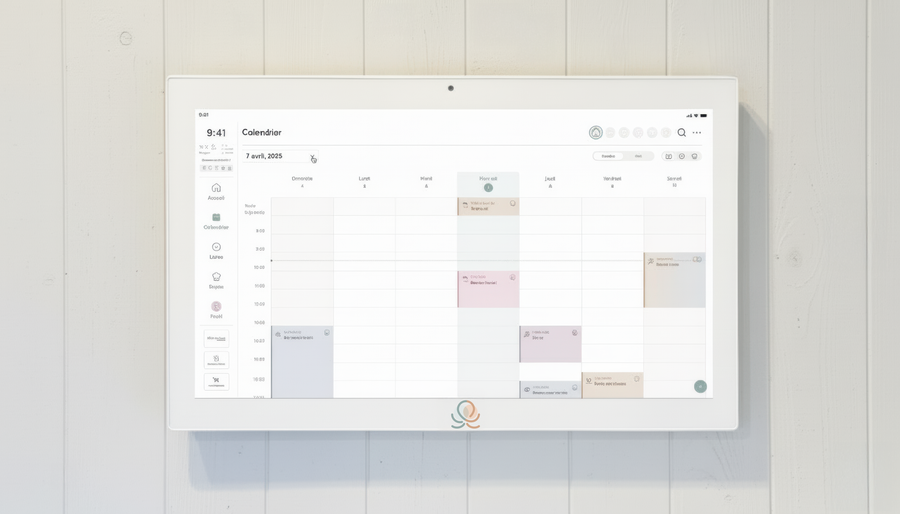
Get the whole family organized with Octave
Meals, chores, the calendar and routines for the whole family in one place: on everyone's phone and on the Station on your wall.
The app is free on iOS and Android.